A buyer seeking fuel in Jurong may need a local delivery to a worksite or a bulk cargo arranged through a terminal and vessel. Those routes serve different business needs, and the right choice affects logistics, scheduling and delivery planning. TTT means a transfer, assignment or delivery of product between storage positions within a terminal or tank-storage environment. Skylink Imports: Powering Global Energy & Fuel Solutions. The company focuses on reliable sourcing, quality-assured fuels and global logistics for aviation, industrial and energy markets.z; marine distillate falls under the ISO 8217:2024 marine-fuel standard family. This page helps you match a product and procurement route to your operations.
Key Takeaways
- Match the product to its intended use.
- Separate local site delivery from international cargo supply.
- State the quantity and destination in your request.
- Confirm the delivery method before requesting a quote.
- Specify the required fuel standard for the application.
Match the procurement route to the delivery point and intended use before requesting a quote.
Choosing The Best Guaranteed Bulk Fuel Supplier in Jurong | Skylink Imports
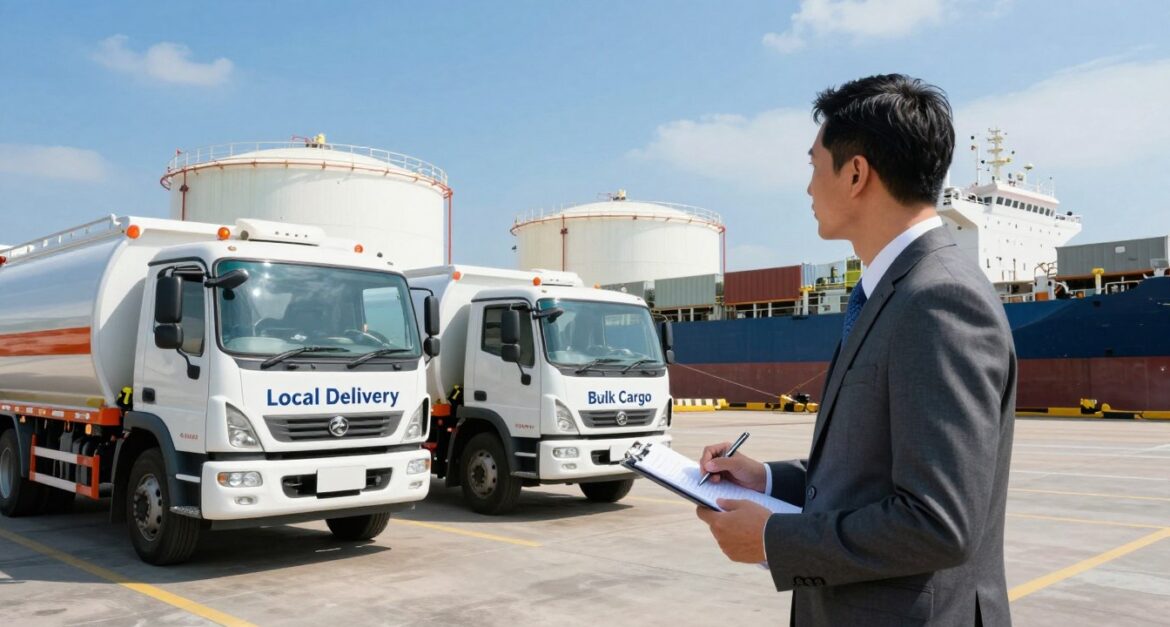
A construction site needing a truck delivery has a different supply requirement from a buyer arranging a seaborne diesel cargo. A supplier arrangement should fit the actual delivery point, not just the product name. Road-tanker delivery serves a site or fleet drop when local transport is arranged. An international cargo may instead move through a terminal and onto a vessel.
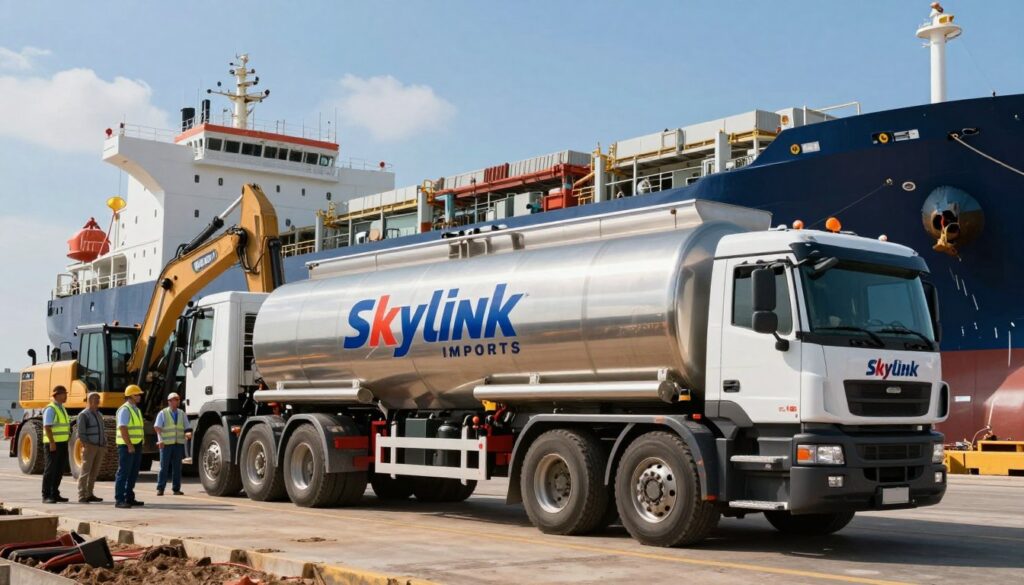
Skylink Imports focuses on sourcing, quality assurance and global logistics for international energy transactions. Its stated role does not establish local last-mile distribution or ownership of a Jurong depot. Buyers looking for global petroleum and aviation-fuel sourcing can review the company’s broader supply focus.
A road-tanker drop and an export-terminal cargo are different services; confirm the actual delivery point before treating them as interchangeable.
The product range may include EN590 10 PPM diesel, crude oil, LPG, LNG, coal and bunker fuel. These are distinct products, and each request needs its own grade, quantity and delivery details. A fleet buyer may need recurring road deliveries, while a cargo buyer may need terminal loading and vessel coordination.
Bulk supply can use road tankers or international cargo movements on FOB, CIF or STS bases. Across a supply chain, product may move from refinery to terminal, vessel, truck and final delivery site. A site buyer, a fleet operator and a seaborne cargo buyer therefore need different logistics plans and quote details.
State the required product, quantity, destination and delivery method when asking whether a supplier can serve the transaction.
What EN 590 Diesel Specifications Should Singapore Buyers Check?
For automotive diesel, use EN 590:2025 as the starting specification and confirm that its grade and limits match the destination.EN 590:2025 is an automotive diesel standard, not a marine-fuel specification. Buyers requesting EN590 10 PPM Diesel should put the required quality limits and climatic grade in the contract.
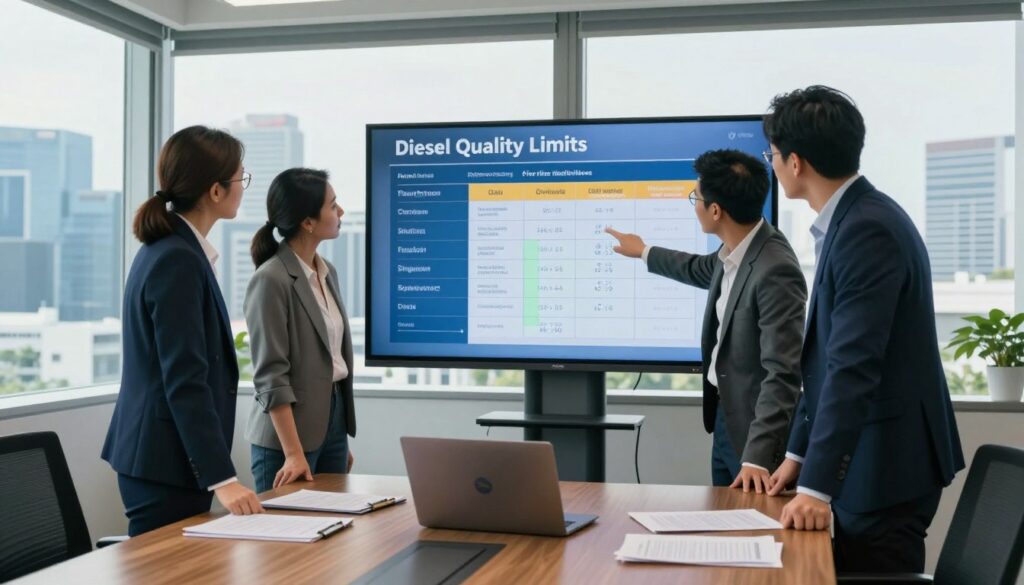
EN 590:2025 limits for automotive diesel
The EN 590 Diesel Specifications include a maximum sulfur level of 10 mg/kg, equal to 10 ppm, and a minimum cetane number of 51. The standard also sets a maximum FAME content of 7% v/v and a maximum T95 of 360°C. For summer grades A, B and C, minimum density at 15°C is 815 kg/m³.
| Parameter | EN 590:2025 | Singapore FOB 10 ppm assessment | Singapore motor-vehicle statutory limit |
|---|---|---|---|
| Sulfur | 10 mg/kg maximum, 10 ppm | 10 ppm maximum | 10 ppm maximum |
| Cetane | 51 minimum | 51 minimum | 51 minimum |
| FAME and density | FAME up to 7% v/v; summer A-C density at 15°C at least 815 kg/m³ | FAME NIL; density at 15°C, 0.820-0.845 g/ml | FAME up to 7% v/v; density at 15°C no more than 845 kg/m³ |
| T95 | 360°C maximum | Not stated in assessment values here | 360°C maximum |
The Singapore FOB assessment specification cited for 2026 also sets a minimum flash point of 66°C, viscosity of 2.0-4.5 cSt at 40°C, maximum water of 200 mg/kg, and HFRR wear scar diameter of 460 μm. Its CFPP is no warmer than −5°C and cloud point no warmer than −1°C. Those assessment values serve a market function distinct from the automotive standard and statutory requirements.
Singapore assessment and statutory limits
Singapore’s motor-vehicle diesel limits also cap polyaromatics at 8 wt% and manganese at 0.002 g/L. EN 590:2025 sets the flash point above 55°C. It limits particles to 10,000 particles/ml for particles at least 4 μm, at the point of particle certification using IP 630 procedures. Cold-flow requirements depend on climatic grade, so select one for the destination and season.
FAME NIL and B0 are different contract requirements, so state the precise requirement rather than assuming one term means the other. Put the required climatic grade and any zero-FAME requirement explicitly in the contract.
Which Supply Route Fits: Local Delivery, FOB, TTT or TTV?
Choose local delivery for a site or fleet drop, and choose a terminal or vessel transaction when the product is being traded as a cargo. TTT moves product between storage positions; TTV moves product from terminal storage onto a vessel. Those movements involve different coordination and should be described separately in the contract.
Local delivery compared with FOB cargo
| Route | Product movement | Key coordination |
|---|---|---|
| Local road-tanker delivery | Truck to site or fleet location | Delivery point, truck access and receiving arrangements |
| FOB cargo | Export terminal onto buyer-nominated vessel | Vessel nomination, terminal loading and agreed export point |
| TTT | Between storage positions within a terminal or tank-storage environment | Inspection, title transfer, quantity and terminal access |
| TTV | Terminal storage onto a nominated vessel | Vessel nomination, berth availability, loading window and terminal schedule |
Land, coastal and marine supply can include STS and quayside vessel delivery. For bunkering or other marine fuel needs, identify whether the required movement ends at a storage tank, a quay or a vessel. A TTT storage-position transfer is not the same operation as loading product onto a vessel.
TTT and TTV at the terminal
A tank-storage receipt alone does not prove product ownership, control or authority to sell. The claimed product must connect to its title holder, terminal and transaction party. A workable TTT procedure also states how inspection takes place and how title transfer is recorded.
Contracts should set remedies for a failed inspection, a quantity shortfall, unconfirmed terminal access or an inability to transfer title as represented. Do not treat a tank receipt as proof that its holder owns or can sell the product.
How Does an EN590 Diesel Buying Procedure Work?
An FOB diesel purchase works only when the cargo contract and the buyer’s vessel arrangements meet at the agreed export terminal. Under FOB, the supplier makes the cargo available and loads it onto the buyer’s nominated vessel. FOB means loading at that export terminal, not delivery to your final site.
The EN590 Diesel Buying Procedure links the agreed product to a ship and loading slot. The supplier handles loading under the FOB term. After loading, the buyer arranges ocean freight and marine insurance, plus the voyage and arrival plan.
- Verify the supplier and confirm the refinery allocation for the requested cargo.
- Agree on the diesel specification and contract terms, including the export terminal.
- Charter and nominate the vessel, then share the nomination with the relevant parties.
- Schedule terminal loading and coordinate the available loading window.
- Arrange an independent cargo inspection at the agreed inspection point.
- Complete loading, then manage freight, insurance, voyage scheduling and port agency services.
Vessel chartering and freight affect the buyer’s post-loading movement. Marine insurance, voyage scheduling, arrival coordination and port agency services also sit with the buyer for an FOB purchase. The supplier’s loading duty and the buyer’s voyage arrangements should meet at the same terminal schedule.
Confirm which party controls each booking and cost before the vessel is nominated.
How Can Buyers Verify a Supplier and Tank-Storage Claim?
Verify the company and the product-control chain before relying on a seller’s offer or documents. Authenticate an inspection report with the issuing inspection company and confirm storage directly with the terminal. Supplier checks help protect your business from relying on an unconfirmed claim.
- Check company registration and the relevant trading licence.
- Review beneficial owners and directors, then screen the company and relevant parties for sanctions.
- Authenticate SGS Inspection reports directly with the issuing inspection company, including the product and inspection point.
- Request terminal confirmation for the claimed storage position and use independent inspection to check the product.
- For a Singapore bunker supplier, check its MPA accreditation status and applicable licence requirements.
A buyer’s own supplier checks remain necessary even when a counterparty holds an accreditation. Singapore MPA bunker-supplier accreditation requires minimum paid-up capital of S$500,000 and annual licence renewal. Accredited suppliers need a quality management system based on SS 524:2021, certified by a Singapore Accreditation Council-accredited certification body.
Accredited suppliers submit an annual SS 524:2021 audit report to MPA before licence expiry. Accreditation assesses SS 600 and SS 648 through the Bunker Supply Records KPI, with a minimum total weighted score of 75 to remain accredited. These requirements describe the accreditation process, not a substitute for transaction-specific checks.
Ask the terminal to confirm the relevant storage position directly before treating a tank claim as actionable.
What Should the Contract and Cargo Documents Confirm?
A workable fuel contract separates the price formula from the product specification and ties payment to clearly defined documents and milestones. State the quality, quantity, delivery basis and payment trigger in the signed contract. A price reference does not define the product’s required quality.
- Product and quality: name the diesel grade and every required specification.
- Quantity and measurement: state the volume, measurement method and agreed tolerance.
- Price basis and differential: identify the reference, calculation period and adjustment.
- Delivery term and timing: name the delivery basis, location and relevant dates.
- Inspection, title and payment: set the inspection point, title-transfer conditions and payment triggers.
A Singapore regional diesel deal may use the Platts Singapore 10 ppm gasoil assessment plus or minus a differential as its price basis. Contract the quality specification separately. That distinction lets the price formula and product requirements remain clear without treating the assessment as a quality certificate.
ICPO, TSA, CI, PPOP, SGS inspection and MT103 may appear in structured transaction paperwork. The contract should name each required document, identify who supplies it and set the stage for when it is due. TTT and TTO paperwork should also align with the agreed product and title-transfer steps.
Letters of credit, escrow and trade credit are possible payment structures. Trade credit can use 15-60 days post-delivery as an example, not a guaranteed offer. Have both parties agree in writing on what happens to payment if an inspection or title-transfer condition is not met.
What Can Delay Delivery or Change Quote Readiness?
A cargo can be commercially agreed before its loading window is confirmed, so readiness depends on both terminal and vessel schedules. Refinery maintenance, vessel availability, port congestion and document processing can delay loading. A requested destination is not the same as a confirmed delivery schedule.
Treat an indicative loading schedule as provisional until the terminal and vessel arrangements are confirmed.
Refinery maintenance can affect cargo readiness at origin, while vessel availability shapes when a cargo can be lifted. Port congestion and documentation processing can also shift the schedule. A change in one part of the chain may require the other parties to adjust their bookings.
Prepare the product, quantity, origin or loading location, destination, delivery basis, timing and inspection requirements for a quote request. Those details help define the requested transaction without implying that a schedule or delivery point is already secured.
Location terms such as Rotterdam, Houston, Fujairah and Jurong should be stated as requested origins, loading points or destinations. Naming a location does not establish that Skylink Imports operates a terminal or facility there. For construction, fleet or refuelling needs, distinguish the final site from any cargo loading point.
International fuel trading can involve several handoffs, so keep the requested delivery point distinct from the loading location. Send a complete cargo brief and request a confirmed loading window rather than treating an indicative schedule as fixed.
Conclusion
A clear product specification and a workable delivery route are the foundations of a dependable bulk-fuel enquiry. Your fuel needs may call for a local delivery or an international cargo, and the contract should identify the route that fits the intended use.
Prepare the product, quantity, destination, delivery basis and timing before requesting a quote. Clear details help frame the supply discussion around your operations and logistics requirements, without assuming a delivery schedule or local service arrangement.
Contact Skylink Imports with your product, quantity, destination and preferred delivery basis to discuss a quote.
FAQ
Is EN 590 diesel suitable for a vessel’s marine-fuel requirement?
How much advance notice should I give for a vessel nomination?
Can a fuel cargo be priced from Platts while using a separate quality specification?
What should I confirm before accepting a seller’s inspection report?
Can one transaction move product from a tank into a vessel?
Which details should I include in a bulk diesel RFQ?