
Steps to Find the Best Guaranteed Bulk Fuel Supplier
A missed fuel delivery can interrupt work, delay commitments, and create costs beyond the purchase price. For a Canadian business, an empty tank can idle equipment, disrupt customer service, and leave staff waiting. Your fuel needs may also change with the season, workload, or fleet size. A useful delivery guarantee states what the supplier will deliver, where, and when, along with any exceptions.
A service commitment describes agreed performance and remedies; an unconditional promise suggests there are no limits. The contract should make the real scope clear. PPM is a unit expressing how many parts of a substance are present per million parts of a mixture. Skylink Imports specialises in petroleum product and energy commodity procurement and supply for buyers worldwide, connecting qualified buyers with suppliers, refineries, and authorized mandates to facilitate transactions. This article helps you assess a supply arrangement against your operation’s demands.
Key Takeaways
- Measure delivery commitments against your actual operating schedule.
- Check the supplier’s identity, licences, owners, and terminal arrangements.
- Compare EN590 test results with every contracted quality limit.
- Set inspection scope and payment triggers in the signed agreement.
- Define transaction terms and transfer points in writing.
Steps to Find the Best Guaranteed Bulk Fuel Supplier for EN590 Diesel
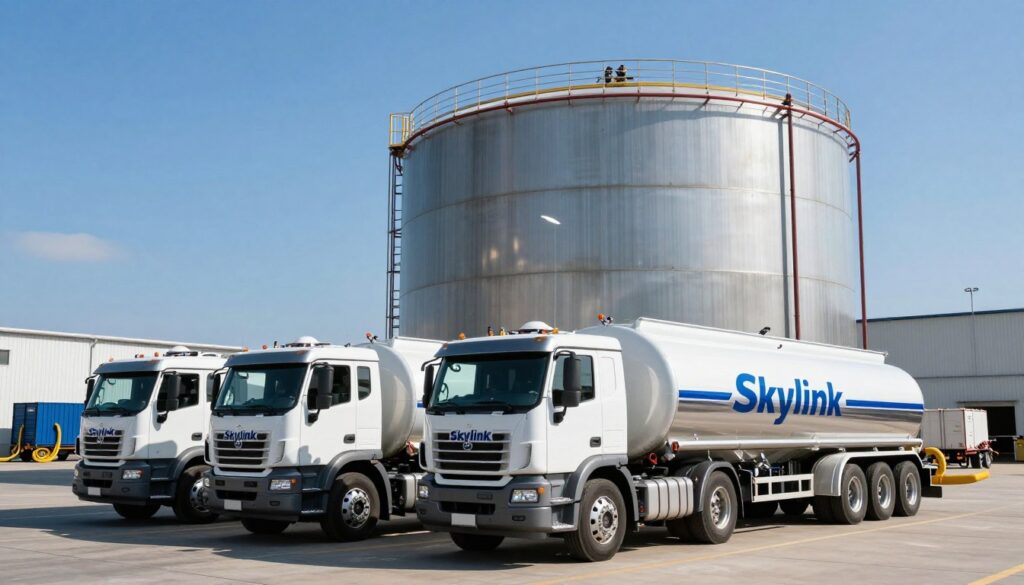
Start by comparing the supplier’s written delivery commitment with your consumption pattern, site access, and storage capacity. A reliable fuel supplier must be able to serve your location at the times and volumes your operation requires. Review regular consumption, seasonal peaks, planned demand changes, and the amount your site can safely store.
Check whether the service includes scheduled refills, emergency delivery, or direct-to-equipment service. Confirm delivery areas, fleet capacity, and response times in the service-level agreement. Ask how the supplier handles delays and whether its financial stability supports ongoing service. A low wholesale fuel price does not help if a delivery gap stops work.
Match delivery capacity to your operation
Site storage and containment affect the size and timing of each order. Check truck access, unloading space, and safe procedures for your equipment. In Canada, oil and fuels are dangerous goods under the Transportation of Dangerous Goods Act, 1992 and/or its regulations. Vessel transport of bulk oil includes loading, carriage, and unloading, with vessels subject to applicable oil-tanker rules.
Portable tanks used to carry packaged oil by vessel must be approved for dangerous-goods transport and follow relevant rules. Portable tanks carrying oil cannot be filled or discharged on a cargo vessel or barge deck; filling and emptying must take place ashore.
Verify the supplier and its safeguards
Match the supplier’s legal name and registration number to its incorporation certificate, country of incorporation, and trading licence. Verify beneficial owners and signing directors, then screen counterparties against sanctions lists. Petroleum documents may include an inspection report, refinery allocation or lifting letter, and Certificate of Origin.
Call the inspection company to confirm report numbers. Confirm a Tank Storage Agreement or terminal custody directly with the terminal operator, and arrange an independent facility inspection. Use this buyer checklist before signing:
- Confirm the legal entity’s identity.
- Verify licences and beneficial owners.
- Call the inspection company about report numbers.
- Confirm storage directly with the terminal.
- Document delivery commitments and exceptions.
Before signing, verify the terminal arrangement directly with its operator rather than relying on a forwarded storage document.
Check EN590 Specifications and SGS Inspection
EN590 diesel is specified by measurable limits, including a maximum sulfur content of 10 ppm and a minimum cetane number of 51. Do not accept EN590 10 PPM diesel based on sulfur alone; compare the full contracted specification with the cargo’s test results.
Use the agreed limits to review the laboratory report. The required test method matters because it identifies how each result was measured.
Compare the specification with the test results
| Property | EN590 requirement | Test method |
|---|---|---|
| Sulfur | Maximum 10 ppm | ISO 20846 |
| Cetane number | Minimum 51 | ISO 5165 |
| Density at 15°C | 820-845 kg/m³ | ISO 3675 |
| Viscosity at 40°C | 2.0-4.5 mm²/s | Not listed |
| Flash point | Minimum 55°C | ISO 2719 |
Temperate-climate filterability limits range from +5°C for Grade A to -20°C for Grade F. EN590 also sets maximum water content at 200 mg/kg, tested under ISO 12937. Maximum total contamination is 24 mg/kg, tested under ISO 12662.
Arrange independent cargo checks
Agree on an independent inspection provider and its scope in the contract. A diesel cargo inspection can include tank sampling, laboratory testing, and quantity measurement against vessel ullage reports. These checks help you compare the delivered cargo with the contractual quality and quantity requirements.
SGS Inspection is a named inspection option, not a substitute for defining the work. Specify sampling points, test scope, report details, and the records needed for acceptance. Ask that the inspection report identify the cargo and show the results against the agreed Specifications.
Agree in writing which inspection results and quantity records must be accepted before payment is released.

Compare FOB, TTT, TTV, and TTO Buying Procedures
Under FOB, the buyer takes ownership and risk at the ship’s rail by the loading arm, so the inspection and document sequence matters before payment.
The 2026 FOB sequence includes a sales and purchase agreement, bank pre-advice, a product-document package, a letter of credit or standby letter of credit, loading inspection, bill of lading, and payment against shipping documents.
FOB ownership and risk transfer at the loading point, while CIF title transfers at the loading port. Under CIF, the seller arranges freight and marine insurance, but title does not wait for the cargo to reach the discharge port.
For TTT, the contract must identify the tank, title-transfer evidence, inspection point, and payment trigger.
TTO uses a registered tank extension in the buyer’s name as a transaction document, with an independent inspection before payment. TTV moves product from a terminal tank directly into the buyer’s nominated vessel, with payment based on the quantity injected. TTT is a term buyers should define precisely rather than assume it describes one fixed process.
Reconcile every Incoterm or transaction label with the signed contract and shipping documents. Do not release funds against a transaction label alone; match the payment trigger to verifiable documents and the agreed transfer point.
Conclusion
A dependable supply decision rests on verifiable commitments, not assurances alone. Choose a fuel supplier whose delivery terms fit your operation, whose product and documents can be independently checked, and whose payment trigger relies on evidence you can review.
Skylink Imports works in petroleum product and energy commodity procurement and supply, connecting qualified buyers with suppliers, refineries, and authorized mandates worldwide. Prepare a written request that states your product specification, quantity, delivery location, inspection criteria, and preferred transaction terms. Share it with Skylink Imports in line with its procurement and supply role.
Prepare the product, quantity, delivery, inspection, and payment requirements in one written brief before requesting proposals.
FAQ
Is SGS the only inspection company a buyer can use?
Does CIF transfer title when the cargo reaches the discharge port?
What should a buyer confirm before accepting a tank-to-tank, or TTT, offer?
Can a portable tank carrying oil be filled on a cargo vessel deck in Canada?