For Canadian buyers, the right D6 supplier is one that can document a specific No. 6 Fuel Oil grade, confirm its sulfur and viscosity, and offer workable bulk delivery terms. A D6 label alone does not establish those details. Residual fuel oil is the heavier fuel remaining after lighter petroleum fractions have been removed.
Canadian industrial, power-generation, and marine buyers need clear product records before arranging a bulk shipment. A supplier’s business type matters less than its ability to document the agreed product and delivery plan. This guide helps you set a clear product target and assess a supply offer. Start with a written grade and test details, not a label. Treat the D6 label as a starting point for due diligence, not as a complete product specification.
Key Takeaways
- Ask for the exact No. 6 Fuel Oil grade and its test method.
- Check sulfur and viscosity as separate product properties.
- Match the fuel specification to your equipment and operating route.
- Compare supplier offers using the same quantity, port, and delivery term.
- Set delivery risk, payment, and insurance rules in the contract.
- Check Canadian export steps and destination-market controls before shipment.
D6 Product Identity and Grade Specifications
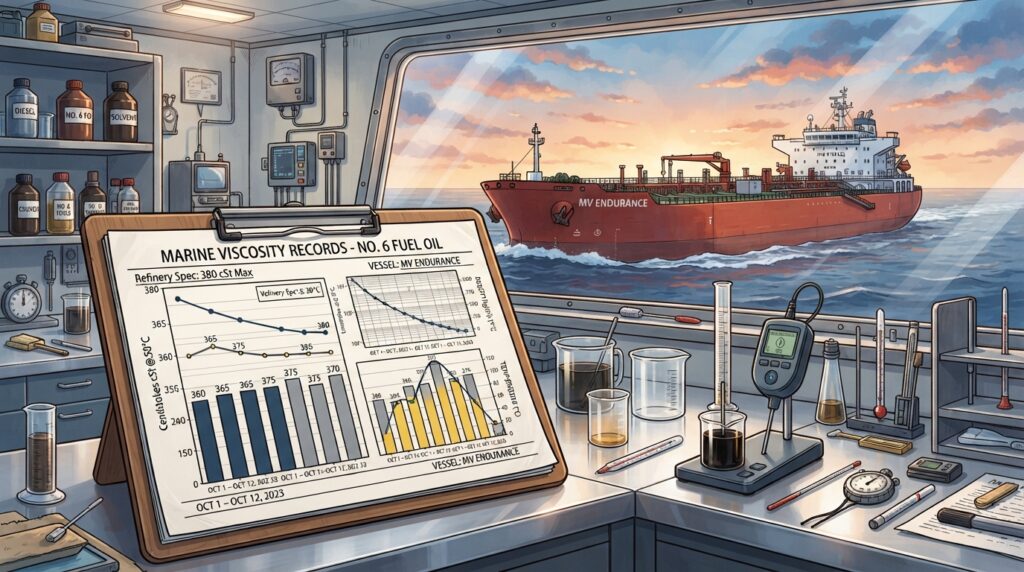
A trading label alone cannot tell you the product’s full specification or end-use suitability. D6 is an informal trading label for residual fuel designated as No. 6 Fuel Oil, but traders do not use it as one universal specification.
Request the recognized grade, its test method, and measured properties in writing. No. 6 Fuel Oil is a grade under ASTM D396, a fuel-oil standard. The ASTM D396 standard covers fuel-oil grades, including No. 6.
Do not treat D6 as a complete product specification; require a named grade and its agreed test details.
Separate the D6 Trade Label from the Grade
Residual fuel oil is the heavier fuel remaining after lighter petroleum fractions have been removed. No. 6 Fuel Oil names a grade within the ASTM D396 system, while D6 is a trading term that may be used inconsistently.
A supplier may describe a product as virgin fuel oil, but that phrase does not replace a grade or test result. Ask which standard and test methods apply to each stated property. The fuel oil specification should also identify the sampling and testing basis agreed for the transaction.
Compare Residual and Marine Classifications
Marine classifications use different labels. Under ISO 8217, IFO 380 and IFO 180 identify marine fuel by maximum viscosity, measured in centistokes (cSt).
| Term | Classification context | What the label tells you |
|---|---|---|
| No. 6 Fuel Oil | ASTM D396 fuel-oil standard | Grade designation used for residual fuel called D6 in informal trading |
| IFO 380 | ISO 8217 marine fuel classification | Maximum viscosity of 380 cSt |
| IFO 180 | ISO 8217 marine fuel classification | Maximum viscosity of 180 cSt |
Viscosity and sulfur content are separate checks, so one result does not establish the other. Heavy fuel oil and residual fuel oil labels also need clear, agreed specifications. Require the supplier to identify the precise grade and the test method used for each agreed specification.
Match the Grade to the End Use
A power plant or industrial site equipped for heated residual fuel can use D6 only when its specification and operating requirements are met. Equipment fit matters: power generation, industrial boilers, furnaces, and larger ships may use residual fuel when designed for it.
Suitability depends on the exact grade, equipment, and emissions rules. D6 may need preheating and heavy-fuel handling; its described preheating range before use is 104-127°C. A virgin fuel oil label alone cannot show whether a burner or ship system can handle the product.
Marine buyers must also match sulfur limits to the ship’s route. The Canadian Arctic became a MARPOL Annex VI Emission Control Area (ECA) on March 1, 2026. The 0.10% ECA sulfur limit applies to fuel oil used by ships inside an ECA.
| Operating area | Sulfur limit | Effective date or condition |
|---|---|---|
| Canadian Arctic | 0.10% | ECA status from March 1, 2026 |
| Other Emission Control Areas | 0.10% | Applies within an ECA |
| Outside Emission Control Areas | 0.5% | Global limit effective January 1, 2020 |
These limits apply to ship fuel in the stated operating areas. The global limit outside ECAs took effect January 1, 2020. A fuel oil grade that fits a boiler may still fail a ship’s route-based sulfur rule.
Check the planned voyage against every ECA it enters, not only its port of delivery. Confirm the full voyage route before accepting a marine fuel specification, since the applicable limit follows the waters where the ship operates.
How to Evaluate D6 Fuel Oil Suppliers Canada
Two offers are comparable only after you align the grade, shipment quantity, destination port and delivery term. Like-for-like details let you judge what each fuel oil supplier is offering, rather than comparing unlike cargoes.
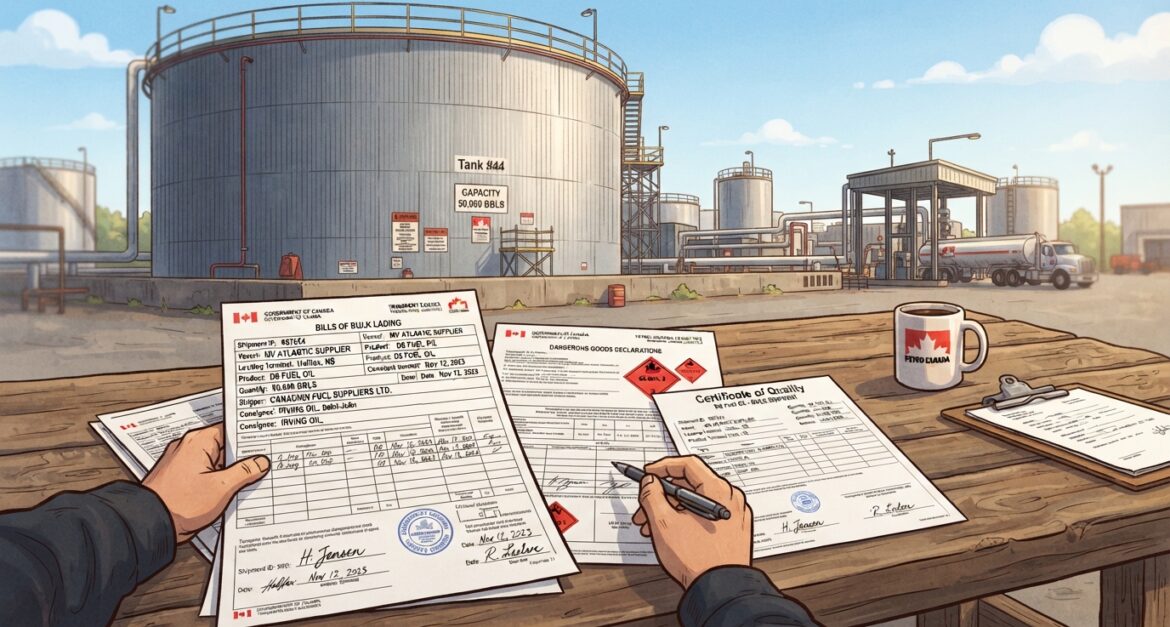
Check the counterparty’s legal identity and whether its records match the proposed contract. A certificate of analysis (COA) can state sulfur, viscosity, density, flash point, pour point, water, and sediment for the tested lot.
Check the Counterparty and Product Evidence
Review the company’s legal name and confirm that its product records describe the same grade and quantity named in its offer. A COA should match the proposed specification, not merely carry a familiar product label.
Compare the COA with the sales contract before you assess the price. For virgin fuel oil, as for other petroleum products, ask whether the stated values refer to the lot being offered. A supplier exporter should be able to explain the product description and the basis for its test values.
Compare the Commercial Offer
Match grade, quantity, destination port, and delivery term across every quote. Platts benchmarks serve as reference points for physical and financial fuel contracts, not guaranteed transaction prices. Regional supply and transport costs can shape a quote, along with local supply-and-demand imbalances.
A lower quote may reflect a different route, delivery basis, or quantity. Write down the named grade and quantity in the same units, such as metric tons, before comparing totals. Also check that the offer’s named destination port matches your receiving plan.
SKYLINK describes its role as connecting buyers with sources for EN590 10PPM Diesel, Jet Fuel A1, LNG, LPG, Crude Oil, D6, Bitumen, and other petroleum products. Its stated scope covers spot transactions and long-term contracts. This is company positioning, not a quality ranking.
Request the same named specification and delivery basis in every quote so the commercial comparison is meaningful.
Contract Terms That Protect a Bulk Transaction
A bulk deal can leave you carrying freight risk or an uninsured loss if the contract names delivery but not the risk-transfer point and coverage. Clear terms show who handles each part of the shipment and when your risk begins.
Put the chosen Incoterms in the sales contract. Incoterms set responsibilities for shipping, insurance, duties, and the point when delivery risk transfers. The named place and version help define the agreed delivery basis.
Payment terms also need clear document rules. A letter of credit can provide payment through your bank when the seller meets the shipment and documentation conditions stated in the credit. The bank checks those documents against the credit’s terms.
Cargo insurance depends on the policy and shipping arrangement. Some lower-cost policies cover only total loss, which may not cover partial damage or other losses. Read the policy terms against the cargo and voyage risks in your deal.
- Product grade and specification
- Shipment quantity and measurement basis
- Delivery point and named Incoterm
- Payment method and required documents
- Insurance scope and exclusions
Define the measurement basis for each metric ton figure, including how the shipped quantity will be recorded. The contract should also name the documents that trigger payment, so the parties work from the same requirements.
Read the insurance exclusions against the cargo and voyage risks you are actually accepting.
Canadian Export Steps and Compliance Checks
A Canadian exporter should establish its export business number and verify shipment-specific controls before committing cargo. Start with registration: activate an exporter business number through a Canada Revenue Agency (CRA) import and export program account.
Check the exact tariff item and export rules for the goods and destination. Canada’s 2026 Customs Tariff Schedule took effect January 1, 2026. Chapter 27 covers mineral fuels, mineral oils and their distillation products, bituminous substances, and mineral waxes.
Chapter 27 is a broad category, not a final tariff classification for every fuel or oil shipment. The correct tariff item depends on the actual goods. Crude oil and other petroleum products may fall within the chapter, but check the item that fits your shipment.
Set Up Canadian Exporter Registration
Use the CRA import and export program account process to activate your exporter business number. Set up that account before arranging an export declaration or preparing goods for release.
Prepare Declarations and Shipment Documents
Export declarations apply to goods valued at $2,000 or more. Prepare a commercial invoice and any certificates needed for controlled or regulated goods, or certificates of origin required by the destination market.
Use this checklist to organize the export work:
- Activate an exporter business number through the CRA import and export program account.
- Confirm the shipment’s tariff classification.
- Meet export declaration requirements for goods valued at $2,000 or more.
- Prepare the commercial invoice and required certificates for the goods or destination market.
- Check permits, export controls, sanctions, and restricted-market rules.
A broad tariff chapter does not set the exact tariff item or all market rules for a shipment.
Destination markets may set their own rules for certificates of origin and other shipment papers. Confirm the final classification and destination-market requirements before the cargo is released for export.
Conclusion
A useful first inquiry gives the supplier enough detail to assess product fit and prepare a workable commercial response. Include your required grade and specification, quantity, destination port, and delivery preference.
State whether you want a spot transaction or a long-term contract. Send your request to info@skylinkimports.com or call SKYLINK at USA +1 (432) 243-4545. A short inquiry with the specification, quantity, destination port and delivery preference gives SKYLINK a practical basis to respond.
FAQ
Is D6 the same as diesel?
What should a D6 certificate of analysis show?
Can D6 be used in an industrial boiler?
What does IFO 380 mean?
Does the D6 label tell me its sulfur content?
Does Customs Tariff Chapter 27 give the exact duty for D6?
E-MAIL US
info@skylinkimports.com