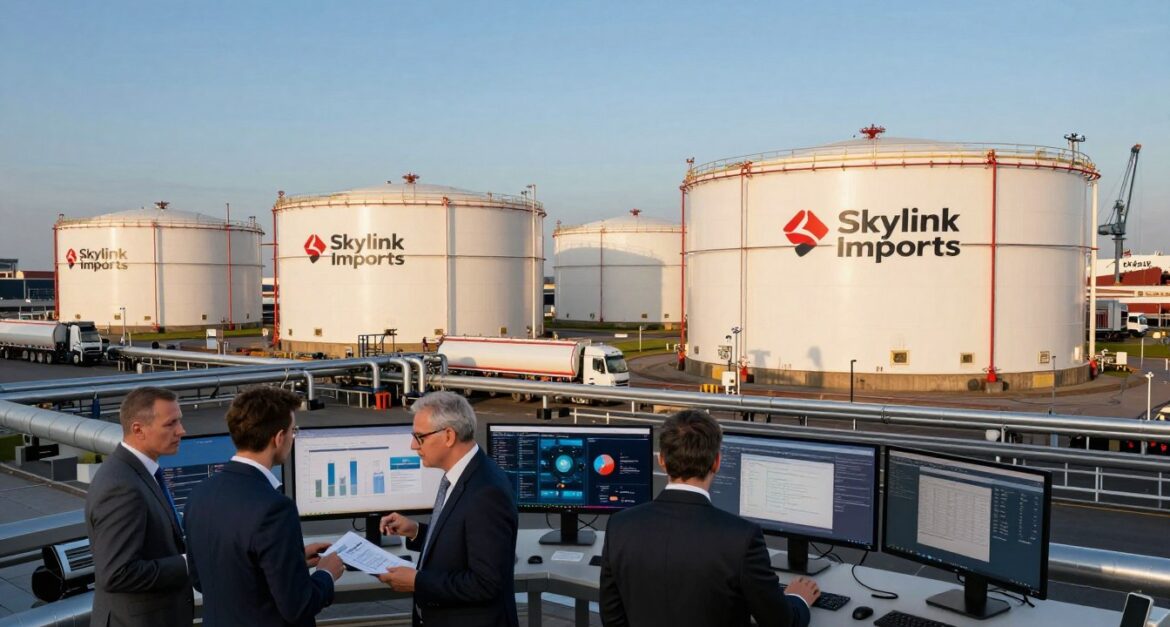
Rotterdam’s independent tank terminals have a combined capacity of 31 million m³, a scale that draws U.S. buyers planning imports. For U.S. or international commercial buyers assessing EN590 10 PPM Diesel, that capacity makes the port a possible route, not proof of available cargo or a local seller.
Skylink Imports – Powering Global Energy & Fuel Solutions. Its stated offer is sourcing, quality-assured fuels and logistics for aviation, industrial and energy markets worldwide. Buyers can inquire about commercial procurement and international sourcing connected to Rotterdam. The service description is not confirmation of a local terminal, operations, stock or a completed transaction.
This page helps you frame an inquiry and assess the terms and evidence behind a bulk fuel offer. Review each commitment in writing before funds or transport are authorized. Treat “guaranteed” as a claim to verify in the contract, not a substitute for documented performance terms.
Key Takeaways
- Rotterdam means Rotterdam, Netherlands, in this service page.
- Confirm the seller’s role and the actual delivery point.
- Match the diesel grade and seasonal terms to your needs.
- Use independent inspection and clear contract milestones.
- Request written pricing, availability and commercial terms.
What Should Buyers Verify About The Best Guaranteed Bulk Fuel Supplier in Rotterdam | Skylink Imports?
Before evaluating a quote, establish whether the contracting party owns the cargo, sources it for you or coordinates another seller’s supply. A business introduction is not the same as a commitment to deliver fuel. The distinction affects who owes performance under the contract and which party can answer for delays or non-delivery.
Ask for the contracting legal entity’s full name, country of incorporation and role in the transaction. Confirm whether the proposed party controls the product, arranges sourcing or acts as an intermediary. Establish which business is responsible for the product source and which party coordinates logistics.
Have the legal entity and its role written into the proposed contract before treating a business introduction as a supply commitment.
Skylink Imports presents its service positioning as sourcing, quality-assured fuels and global logistics for aviation, industrial and energy markets. That description explains the stated offer, but does not establish a Rotterdam operating presence, local stock or a particular transaction outcome. Do not confuse Skylink Imports with a similarly named business; match the proposed contracting entity to its formal company records.
Rotterdam, Netherlands, is a European liquid-bulk location. Rotterdam, New York, is a separate U.S. place, so spell out the country and named terminal in any commercial discussion. Ask what Rotterdam-linked service scope is actually proposed, including whether the offer concerns cargo sourcing, terminal handling or onward transport.
A fuel supplier may sell cargo it controls; an intermediary may instead arrange supply from another seller. Those roles can both appear in fuel services, but the contract should show which party carries each obligation. Ask who invoices you, who can authorise release and who must resolve a quality or delivery dispute.
For more detail on the company’s stated procurement positioning, review its EN590 fuel sourcing and procurement services. Compare that description with the named entity and specific offer presented to you. Have the legal entity and its role written into the proposed contract before treating a business introduction as a supply commitment.
Which EN590 10 PPM Diesel Specifications Should Buyers Check?
EN 590 road diesel is limited to 10 mg/kg of sulfur, but that single figure does not establish overall product conformity. Check every agreed cargo value against the required EN 590 grade and test conditions. A sales description that says “10 PPM” alone does not confirm density, cold-flow performance, cleanliness or lubricity.
Use the cargo specification and inspection certificate to compare measured values with the contract. HFRR is a laboratory test of diesel lubricity that measures the wear scar produced by a reciprocating contact. EN 590 sets a maximum HFRR wear scar of 460 µm, and a minimum flash point of 55°C.
| Parameter | EN 590 requirement | Condition |
|---|---|---|
| Sulfur | Maximum 10 mg/kg | Mass concentration |
| Density | 0.820–0.845 kg/l | At 15°C |
| Viscosity | 2.0–4.5 cSt | Kinematic, at 40°C |
| Cetane number | Minimum 51 | Road diesel |
| Water content | Maximum 200 mg/kg | Mass concentration |
Sulfur, cetane and composition limits
The sulfur maximum is 10 mg/kg, while cetane number must be at least 51. FAME, a fatty-acid methyl ester blend component, is allowed up to 7.0% by volume; 6.5% is listed as typical. Maximum ash content is 0.01% by mass, and particulate content must not exceed 24 mg/kg.
These requirements describe road diesel, not every fuel sold through a port. Rotterdam marine grades include MGO, HSFO and VLSFO. LNG, LPG and ammonia are also named as alternative or future marine fuel options. Those products are not substitutes for EN 590 diesel just because they move through the same liquid-bulk network.
Density, flow, contamination and seasonal cold limits
Seasonal limits affect whether diesel can meet the intended delivery period. The listed summer CFPP maximum is −5°C, and the winter maximum is −15°C. Summer specification dates run from 16 March through 21 October; winter dates run from 22 October through 15 March. Check the seasonal requirement for the agreed cargo period, rather than relying on a year-round label.
Confirm the test condition alongside each number. Density is measured at 15°C, and viscosity at 40°C. The EN 590 diesel limits should match the agreed cargo specification, including seasonal cold-flow requirements. Match the agreed grade and seasonal limits against the cargo’s inspection certificate, not only the sales description.
What Makes Rotterdam a Practical Bulk Fuel Hub?
Rotterdam’s appeal for bulk fuel buyers is its concentration of liquid-bulk storage, industry and multiple onward transport routes. Independent tank terminals have a combined storage capacity of 31 million m³. That scale supports liquid-bulk trade and transhipment, but does not show that a specific tank or product is available for your transaction.
The port includes five oil refineries and 45 chemical companies. These industries contribute to a dense network of operators and infrastructure for energy and chemical cargoes. A buyer considering fuel supply can assess the port as a potential route between a cargo source and its final destination.
Onward transport connections include ship, barge, train, road and pipeline. The best option depends on the transaction’s named delivery point, cargo handling needs and destination. A vessel transfer and a rail movement involve different operators, access arrangements and timing, so the route needs to be set out for the actual cargo.
Port-wide capacity is not a reservation. Tank terminals differ in the products they handle, available services and access rules. Ask which named terminal is involved, whether it can handle the contracted grade and quantity, and what access or transfer arrangement is proposed.
Rotterdam’s logistics network can help connect bulk movements, but transport links alone do not establish a delivery obligation. Confirm who arranges each mode and where responsibility changes between terminal, carrier and buyer. A terminal’s capability also does not show that a particular seller has rights to use its storage.
For an international buyer, the named terminal and onward route shape the practical transaction more than the port’s broad reputation. Confirm the named terminal and onward route for the specific transaction rather than assuming port-wide capacity means a tank is available.
How Is an EN590 Rotterdam Price Built?
The $1,451/MT Rotterdam reference dated 22 October 2026 is an indicative model value, not a price a buyer can trade at by relying on the number alone. It is a five-day-delayed EN590 10ppm FOB Rotterdam reference, not a firm commercial quote. It is not a price offered by Skylink Imports.
What can a market reference tell you?
Rotterdam is identified as Europe’s primary EN590 pricing hub, and prices are typically quoted in dollars per metric ton. A market reference can give buyers a comparison point, but it does not establish cargo availability, terms or a seller’s binding price. Its delayed timing also means it does not represent a live transaction price.
The reference methodology uses Brent crude, a diesel crack spread and adjustments for the reference date. Brent represents the crude-oil component, while the crack spread reflects the market relationship between crude and refined diesel. Date adjustments account for the reference date used in the model.
Read the number with its unit, delivery basis and date. A value in dollars per metric ton does not tell you whether a seller includes terminal charges, whether the offer is FOB or delivered, or when the price expires. Those points belong in a firm offer, not in assumptions drawn from an index.
What to request in a firm commercial offer
Ask the counterparty to provide the price basis, currency and unit in writing. The offer should identify the pricing date, exact product grade, quantity and delivery basis. It should also state payment terms and how long the quote remains valid.
Compare the offer with the reference on like-for-like terms. An FOB figure should not be treated as equivalent to a delivered price if transport or terminal costs differ. Verify that the stated grade and quantity match the intended cargo, and that the commercial offer names the relevant delivery point.
A clear offer lets you assess the price without confusing an indicative market signal with a commitment. The five-day-delayed Rotterdam reference is a model value only, so ask the counterparty to state the exact pricing formula and validity period in its signed offer.
Which EN590 Buying Procedure Fits a Bulk Transaction?
Choose the transaction route by deciding who will control transport and where the cargo will be handed over. FOB, rack and delivered supply describe different logistics responsibilities, not different promises about product quality. Select a procedure that names the parties, physical location and payment milestones.
In an FOB tank-to-vessel transaction, the buyer normally arranges the vessel, shipping and onward transport after loading. A FOB Rotterdam TTV agreement should identify the grade and quantity, seller tank or terminal, buyer’s nominated vessel, inspection rules, injection timing, payment terms and who pays port, terminal and inspection costs.
Rack supply is different: the buyer or its contracted carrier collects fuel at an approved terminal. The pickup plan must identify the collection location and who is authorized to lift the product. Delivered supply instead coordinates transport to an eligible storage location, with the named parties responsible for the agreed movement.
TTT means tank-to-tank, TTV means terminal-to-vessel, and TTO means tank takeover. These labels are not complete operating instructions. The written procedure should state the terminal, cargo, named parties and every payment or release milestone. Avoid inferring custody or timing from an acronym.
Before choosing a route, settle three practical questions:
- Who nominates and controls the transport?
- Where does custody change between the parties?
- What event triggers payment or release of the cargo?
The answers should fit the physical movement and the signed contract. If a vessel is involved, clarify who arranges shipping after loading and which party bears each stated cost. Do not treat an acronym such as TTT, TTV or TTO as a complete procedure until the counterparties define every step in writing.
How Can Buyers Vet an EN590 Fuel Supplier?
A credible-looking offer still needs independent checks on the legal entity, the tank and the cargo records. Company registration, trading authority and storage arrangements should match the entity named in the offer. These checks screen for inconsistencies, but they do not establish title to fuel or prove that a cargo is available.
Verify the company and its trading authority
Check the company’s registration, trading licence and country of incorporation against the relevant national company registry. Compare the legal name in registry records with the proposed contract and payment instructions. Ask the counterparty to explain its authority to sell or arrange the stated supply.
An offer for more than 50,000 metric tons of EN590 from a company registered for less than twelve months is a major fraud red flag. The mismatch between a large promised volume and a short business history calls for stronger independent review. A polished presentation does not resolve that discrepancy.
Confirm the terminal, cargo and documents independently
Use this five-point screen before advancing a transaction:
- Confirm the tank and storage arrangement directly with the terminal operator.
- Reconcile transaction-document identifiers, including grade, quantity, tank location and batch numbers.
- Investigate unexplained offers priced 10–20% below the current market rate.
- Reject advance tank, activation, or similar fees demanded before transaction documents are released.
- Check that names, quantities and validity dates agree across all paperwork.
Verify storage agreements and tank numbers with the terminal operator, not only through contact details supplied by the seller. A request for tank, activation or similar fees before transaction documents are released fits an advance-fee fraud pattern. A price far below market also deserves a clear, documented explanation.
Check the transaction documents for consistent grade, quantity, tank location, batch numbers, validity dates, buyer and seller names, and payment terms. A checklist is a screening tool, not proof of title, authority or physical cargo. Pause the transaction if the seller will not allow direct terminal confirmation of the storage arrangement.
What Does SGS Inspection Verify for EN590 Diesel?
An inspection can test a sampled cargo and measure quantity, but it cannot replace counterparty and title checks. An independent inspector reports findings from the cargo sampled and measured at the agreed location. An SGS Certificate of Quality and Quantity is an inspection record, not a guarantee of ownership, payment, cargo availability or future performance.
Product sampling and laboratory tests
The inspection process can begin with a sample from the nominated tank. A laboratory analyses the sample using specified methods, which lets the parties compare measured properties with the contract. The contract should identify the sampling point and the rules for handling results.
| Test | ISO method | What is checked |
|---|---|---|
| Sulfur | ISO 20846 | Sulfur concentration |
| Cetane number | ISO 5165 | Ignition quality |
| Density | ISO 3675 | Density at 15°C |
| Flash point | ISO 2719 | Flash point; minimum 55°C |
| Water | ISO 12937 | Water content |
EN 590 also uses ISO 12662 for total contamination. The specific tests selected should reflect the agreed cargo requirements. A test result applies to the sample and method stated in the report, so sampling procedures and chain of custody matter to both parties.
Cargo quantity and the inspection certificate
Quantity can be measured by vessel ullage, a method that uses the space above liquid cargo in a tank to determine its level. The inspection procedure can combine this measurement with tank sampling and laboratory testing. The resulting Certificate of Quality and Quantity records inspection findings for the tested cargo and measured quantity.
Read the certificate for the inspection date, named location, cargo identification and reported values. It does not prove the seller’s ownership rights or ensure that a bank will release funds. Those questions need separate contractual and documentary evidence.
Inspection timing and access can affect how well the findings match the cargo later loaded or released. Specify in the contract who appoints the inspector and what happens if results fall outside the agreed tolerance.
Which Documents Should a Bulk Fuel Buyer Prepare?
A letter of credit protects the payment process only when the required documents arrive on time and without discrepancies. The bank pays against the documents specified in the letter of credit, not simply because fuel was ordered. Align the document set with the shipment and the bank’s instructions before paperwork is prepared.
Four document groups commonly support shipment, customs and payment:
- Commercial invoice: required for every shipment; it states the transaction’s commercial details.
- Bill of lading: sea-transport evidence that the carrier received the goods.
- Certificate of origin: states where goods were produced, manufactured or processed and may be needed for customs clearance.
- Letter-of-credit documents: the specific papers the exporter must present to meet the bank’s payment conditions.
The commercial invoice should correspond with the agreed transaction, including the parties, cargo and amount. The bill of lading records the carrier’s receipt for sea transport. A certificate of origin gives customs a declared origin for the goods; whether it is required depends on the applicable clearance requirements.
A letter of credit names the documents and presentation deadlines that govern payment. The exporter must provide the specified documents on time and without discrepancies for the buyer’s bank to pay. A mismatch in a name, quantity or date can put presentation at risk even when the shipment itself has moved.
Review document names, quantities, parties and deadlines against the signed terms and bank instructions. Make sure the seller and buyer names match across documents, and that the bill of lading and invoice describe the same shipment. Have the buyer’s bank review the required document set before the seller prepares shipment paperwork.
What Must a FOB Rotterdam Fuel Contract Set Out?
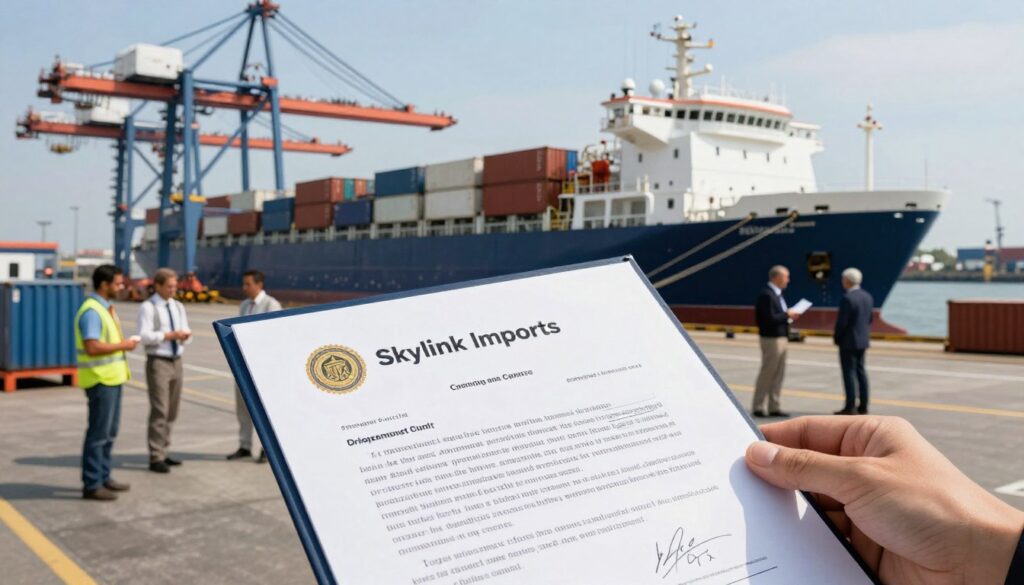
A FOB Rotterdam contract should identify the cargo, delivery point, nominated vessel and the party responsible for each transaction cost. A tank-to-vessel agreement needs clear instructions for the product, loading and cost allocation. Put those duties in signed terms instead of relying on an informal procedure shared separately.
Product, parties and vessel instructions
Name the product grade and quantity, then identify the seller’s tank or terminal. The agreement should name the buyer’s nominated vessel and state who is responsible for arranging the vessel, shipping and onward transport after loading. Include clear vessel nomination instructions and specify the delivery point.
Use the same cargo and location details throughout the contract and any operational instructions. This gives both parties a shared reference for the fuel being loaded and where the loading obligation applies. State which party provides vessel information and who coordinates access with the terminal.
Inspection, timing and transaction costs
Set out the inspection rules and injection timing, along with the payment terms. Identify who pays for inspector attendance, tank access, sampling and laboratory analysis. Also assign port and terminal charges, waiting time and any reinspection costs.
| Contract item | What to specify | Cost or responsibility to assign |
|---|---|---|
| Product and quantity | Grade and contracted volume | Seller’s delivery obligation |
| Tank or terminal and vessel | Named location and nominated vessel | Buyer’s vessel and onward shipping |
| Inspection and sampling | Inspector, rules and sampling point | Attendance, access and laboratory charges |
| Timing and payment | Injection schedule and payment trigger | Waiting time and reinspection costs |
A detailed allocation helps prevent a cost from falling between parties during loading. The inspection agreement should say who pays for each attendance or access requirement, including when a repeat inspection is needed. The same terms should describe how a delay affects the agreed schedule.
Keep the transaction cost responsibilities consistent across the main contract and any inspection agreement. Resolve waiting-time and reinspection charges in the signed terms before vessel nomination.
What Rotterdam Rules and Sanctions Checks Apply?
A Rotterdam delivery by bunker vessel can trigger port-specific controls that do not describe every bulk cargo movement. The Mass Flow Meter, bunker licence and Portbase requirements apply to the described bunker-vessel activity. They should not be read as rules for every fuel cargo merely routed through the port.
Rotterdam bunker rules for vessel deliveries
From 1 January 2026, bunker vessels delivering residual distillates and biofuels in Rotterdam must use an onboard Mass Flow Meter system. Bunker vessels supplying seagoing vessels with residual fuels, distillates or biodiesel in Rotterdam must hold a bunker licence.
Rotterdam bunker activities must be reported and registered in advance through Portbase. The Port of Rotterdam Harbour Master’s Division verifies bunker licences, while the Dutch Environment and Transport Inspectorate regularly inspects bunker operations. Confirm whether the planned vessel activity falls within these requirements.
Russian-origin diesel trade restrictions
Sanctions rules are time-sensitive legal requirements, and their application depends on the transaction.OFAC General License 135 authorises transactions related to the sale, delivery, offloading or import of Russian-origin diesel, including import into the United States, until 12:01 a.m. Eastern time on 7 April 2027.
The European Union and United Kingdom have banned imports of Russian refined products since 5 February 2023. The reported price cap for Russian premium petroleum products carried or serviced by EU and UK shipowners, traders and insurers for third countries is $100 per barrel.
One authorisation does not override other restrictions that may apply to a party, service, route or payment. The legal position can depend on ownership, origin, destination and the roles of involved companies. Treat the stated dates and scope as time-sensitive, not as a complete legal clearance.
These details are not legal advice. Have sanctions counsel verify the parties, origin, route, services and effective rules before committing to a Russian-origin transaction.
How Can Buyers Control Payment and Delivery Risk?
Keep counterparty verification, cargo acceptance and payment release as separate approval decisions. FOB Rotterdam, cargo inspection and a letter of credit address different parts of a transaction. One control cannot prove that the seller has rights, the cargo meets the grade, and the payment documents qualify.
Use a three-gate approach before authorising performance. First, confirm the counterparty and named terminal through independent channels. The purpose is to establish who is contracting and which physical location is involved, not to infer cargo rights from a business introduction.
Second, agree on inspection and release conditions. The contract should make clear what evidence supports acceptance, who can authorise release and what happens if a result falls outside tolerance. A certificate describes inspection findings; it does not settle every delivery obligation.
Third, have the bank validate the payment documents and deadlines. A letter of credit sets a document-based payment process, while vessel movement and physical delivery depend on separate operational steps. Match the bank’s required presentation conditions to the transaction terms before the shipment stage begins.
TTT, TTV and TTO are labels, not complete delivery and payment schedules. FOB Rotterdam describes a delivery basis, inspection checks, sample product and quantity; and a letter of credit governs specified documents. Assess each mechanism on its own purpose and link it to a defined milestone.
A transaction should not advance solely because one document or procedure looks familiar. Set an internal approval point for each gate and make the evidence available to the people responsible for release. Do not authorise a payment or vessel movement until the agreed evidence for that specific milestone has been received and checked.
How Do You Request a Bulk Fuel Quote From Skylink Imports?
A useful quote request gives the supplier enough detail to price the exact product, quantity, route and delivery window. For an EN590 10 PPM Diesel inquiry, identify the actual delivery point and commercial basis. Skylink Imports describes its focus as sourcing,quality-assured fuels and global logistics for aviation, industrial and energy markets.
Include these five details in your inquiry:
- Requested grade and quantity.
- Delivery basis and named Rotterdam location.
- Required delivery window.
- Inspection and document requirements.
- Destination and onward logistics.
A named terminal or vessel gives the proposed route more detail than “Rotterdam” alone. State whether the inquiry concerns tank-to-vessel, tank-to-tank, tank takeover or another delivery arrangement. If transport continues beyond the port, name the destination and explain the onward logistics needed.
Include any inspection method or document requirement that affects acceptance and payment. A buyer with a specific delivery window should state it directly rather than treating a general availability statement as a schedule. Commercial details can then be considered against the proposed cargo and route.
Price, availability and commercial terms must be confirmed in a written offer; an inquiry is not a supply commitment.
Skylink Imports also describes procurement support and fuel exports as part of its sourcing focus. Buyers can review its EN 590 diesel sourcing and export services when considering international procurement. The page description does not set a price, minimum volume, stock position, credit term or delivery commitment.
Qualified commercial buyers can request a quote from Skylink Imports with the five requested details and any transaction-specific requirements. Send the completed requirements through Skylink Imports’ available contact channel and wait for written confirmation of the transaction terms.
Conclusion
A bulk diesel purchase is ready to progress only when the seller, cargo and delivery obligations can each be verified. Sound fuel supply depends on independent counterparty checks, explicit written terms and cargo findings matched to the required grade. A market reference, business introduction or inspection record should not stand in for the full agreement.
Prepare the product, quantity and Rotterdam delivery requirements, then request a written quote from Skylink Imports. Compare the offer’s named parties, route and conditions with your procurement needs before authorising funds or transport. Request written terms for the exact EN590 10 PPM requirement before committing funds or transport.
FAQ
Does a five-day-delayed Rotterdam diesel reference lock in my purchase price?
Can an SGS Certificate of Quality and Quantity prove that the seller owns the diesel?
What is the difference between FOB Rotterdam and tank-to-vessel delivery?
What documents can a U.S. buyer need for a diesel shipment?
Can an LC payment be delayed because of a document discrepancy?
What should I send when requesting an EN590 bulk quote?