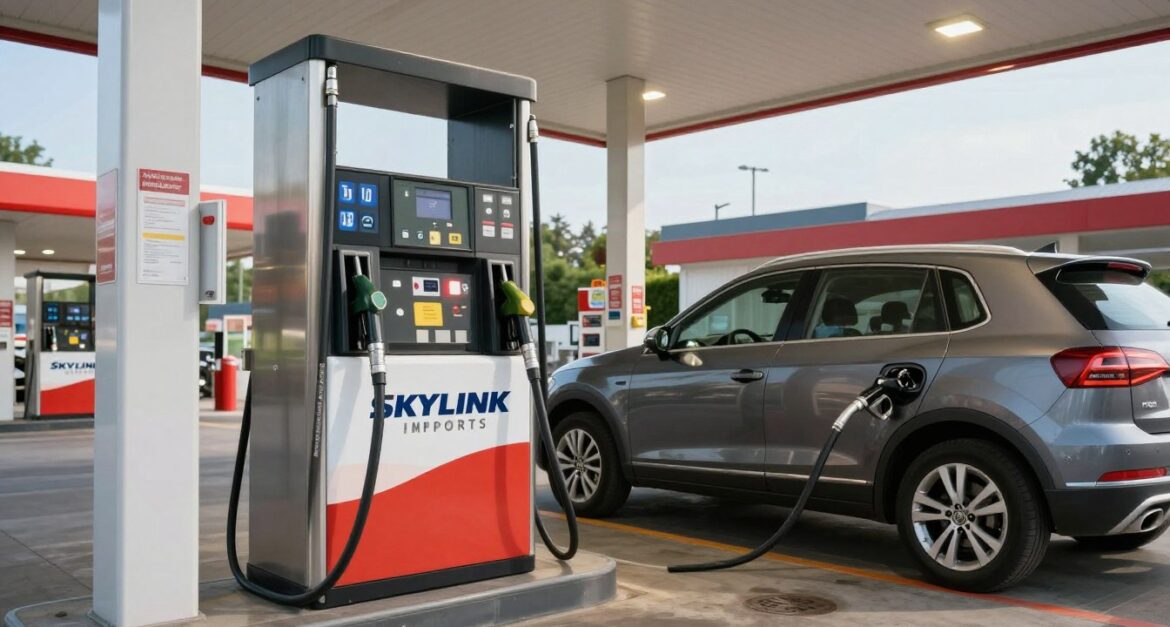
EN 590 sets measurable quality requirements for automotive diesel in Europe, but it is not a fuel brand. That distinction matters when a driver or fleet buyer sees a similar label on fuel sold in different countries. A familiar name alone does not show that a fuel suits every vehicle, machine, or climate. Understanding the EN590 standard is crucial for identifying suitable diesel options.
Buyers should always seek fuel that meets the EN590 specifications to ensure optimal performance in their vehicles.
Understanding the EN590 standard is essential for anyone involved in the diesel market, as it ensures the quality and compatibility of diesel fuel. EN590 provides clarity on what to expect from diesel products across Europe.
The standard describes fuel properties that can be tested. It does not guarantee that every product marketed under a similar name meets the same requirements or suits a specific use. The CFPP is the lowest temperature at which diesel passes through a standardized filter under a specified test.
The EN590 standard is widely recognized in Europe, and it is important for maintaining high-quality diesel fuel across different regions.
For US readers, European fuel specifications and US road-fuel rules are separate systems. A fuel that meets one specification does not automatically meet the other. The label, destination, and equipment all matter. The goal is to explain the standard’s meaning and scope before looking at individual limits.
Understanding the differences in fuel specifications like EN590 and US standards can save buyers from potential issues.
Key Takeaways
- EN 590 sets measurable quality requirements for European automotive diesel.
- A similar label does not prove that every fuel suits every use.
- US road-fuel rules are not the same as European specifications.
- Climate and equipment affect which grade a buyer needs.
- Batch records help show what a delivered fuel contains.
What Is EN 590 and Who Uses It?
The significance of the EN590 standard cannot be overstated, as it plays a vital role in the diesel fuel industry.
EN 590 is a technical specification for automotive diesel, not a law by itself. Some of its fuel limits also appear in legal rules, which can make them compulsory.
Fuel suppliers advertising EN590 compliance should be carefully vetted to ensure they meet the necessary quality standards.
EN 590 describes fuel quality, while laws can require selected limits. A specification label alone is not proof of legal compliance.
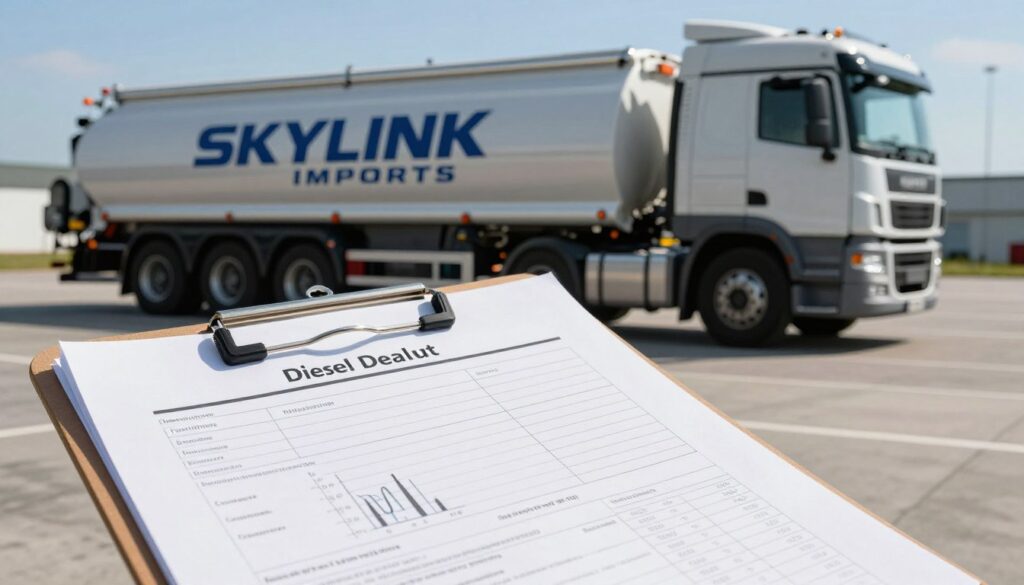
Suppliers across many European countries use the standard to describe fuel properties and support consistent trade. Its requirements have changed as fuel rules and engine needs have changed. The main revisions include:
The EN590 standard plays a significant role in guaranteeing that diesel fuel meets specified quality levels, which are essential for optimal engine performance.
Ensuring that diesel fuel adheres to the EN590 standards helps in reducing emissions and optimizing engine performance.
- EN 590:1993 set sulfur at 0.2% and the cetane number at 49.
- EN 590:1996 lowered sulfur to 500 ppm and kept cetane at 49.
- EN 590:1999 set sulfur at 350 ppm and cetane at 51.
- EN 590:2004 reflected sulfur limits of 50 ppm and 10 ppm, plus a FAME limit of 5%.
- EN 590:2009 raised the FAME limit to 7%.
FAME means fatty acid methyl ester, a type of biodiesel used in blends. These dates mark revisions, not every change in the laws of each country. A search for “the best EN590 standard explained in simple terms 2022” may point to an article date, but 2022 was not one of these revisions.
It’s crucial to understand that the EN590 standard has undergone various updates to keep pace with technological advancements and environmental regulations.
EU regulatory language uses gas oil as a broader category, with diesel as one subcategory. That distinction matters because not every product classified as gas oil is road diesel. The same word can cover fuels with different uses and rules.
EN 590’s scope and history set the context. Its measured properties give buyers a more direct way to compare fuel.
The Best EN590 Standard Explained in Simple Terms: Which Limits Matter?
EN590’s importance spans beyond mere specifications; it is a guideline for achieving cleaner and more efficient diesel fuels.
EN 590 limits sulfur to 10 ppm and sets minimum ignition and other measurable quality requirements. The EN 590 diesel 10 ppm specification means a maximum sulfur content of 10 milligrams per kilogram, not a typical-value promise. The minimum cetane number is 51, a measure linked to how readily diesel ignites.
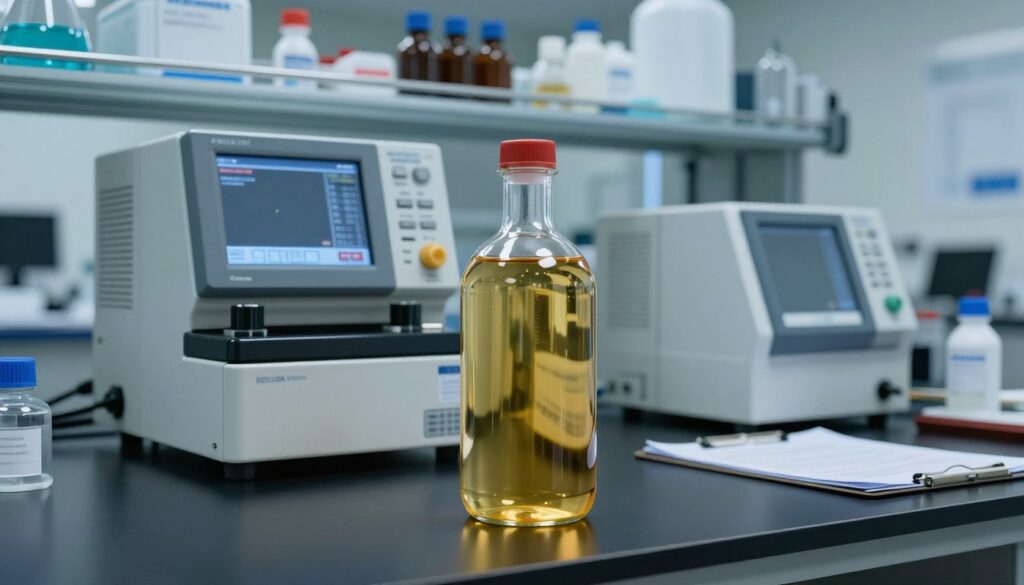
Other limits help define fuel behavior, including viscosity and lubricity. A plain-language overview of EN 590 diesel quality limits can help put those measures in context.
Familiarity with the EN590 standard is a must for anyone involved in the procurement of diesel fuel.
Sulfur, cetane, and core limits
The cetane index has a separate minimum of 46. It is calculated from fuel properties, while the cetane number comes from an engine test. Both help describe ignition quality, but they are not the same measure.
| Property | Unit | EN 590 requirement |
|---|---|---|
| Cetane number | Number | Minimum 51 |
| Sulfur | mg/kg | Maximum 10 |
| FAME | % by volume | Maximum 7 |
| Viscosity at 40°C | mm²/s | 2.000-4.500 |
| Lubricity wear scar diameter | µm | Maximum 460 |
Quality also depends on density, water, and contamination limits. EN 590 caps density at 845 kg/m³ at 15°C, polycyclic aromatic hydrocarbons at 8% by mass, and water at 0.020% by mass. Total contamination cannot exceed 24 mg/kg.
Quality parameters as defined by the EN590 standard are essential for maintaining high performance in diesel engines.
There is no universal answer to which fuel contains the most sulfur. Residual fuel oils may contain more sulfur than road diesel, depending on grade and jurisdiction.
Cold flow and biodiesel
CFPP, or cold-filter plugging point, is the lowest temperature at which diesel passes through a standardized filter under a specified test. Climate grades set cold-flow performance, so a fuel’s CFPP helps show whether it suits expected temperatures.
EN 590 allows up to 7% FAME by volume. EU diesel-fuel rules allow up to 10%, while an EU-wide B7 protection grade must remain available. Those figures describe different limits: the EN 590 ceiling is lower than the broader EU allowance.
That distinction matters for equipment with blend restrictions. Buyers should check the specified climate grade and blend, rather than treating all diesel fuel as interchangeable. The next choice depends on local temperatures and the type of diesel being considered.
How Do EN 590 Grades Compare Across Climates and Fuel Types?
A summer-grade diesel may pass its specification yet struggle in a winter cold spell. The right climate class depends on expected temperatures where the fuel will be used. Temperate grades A-F and severe-winter classes 0-4 set different cold-flow limits.
Seasonal grades for temperate and severe winters
Awareness of how the EN590 standard impacts fuel choice can greatly affect operational efficiency.
Temperate grades A-F have maximum CFPP values from +5°C to -20°C. Severe-winter classes 0-4 reach lower limits, from -20°C to -44°C. A fleet using a summer grade in a colder place may face fuel-filter trouble as temperatures fall.
| Class | Maximum CFPP | Maximum cloud point |
|---|---|---|
| Temperate A | +5°C | Not specified here |
| Temperate F | -20°C | Not specified here |
| Severe-winter 0 | -20°C | -10°C |
| Severe-winter 2 | -32°C | -22°C |
| Severe-winter 4 | -44°C | -34°C |
The table shows the ends and key points of each class range. Temperate grades B-E have maximum CFPP values of 0°C, -5°C, -10°C, and -15°C. Severe-winter classes 1 and 3 have maximum CFPP values of -26°C and -38°C, with cloud points of -16°C and -28°C.
EN 590 and paraffinic EN 15940 fuel
EN 15940 covers paraffinic diesel, including HVO, or hydrotreated vegetable oil. This fuel type has lower density than EN 590 diesel. Neat EN 15940 fuel therefore does not meet EN 590’s density requirement, but it can serve as a blend component when the finished fuel meets its own specification.
| Property | EN 590 | EN 15940 Class A | EN 15940 Class B |
|---|---|---|---|
| Minimum cetane number | 51 | 71 | 51 |
| Density at 15°C in kg/m³ | 820-845 | 765-800 | 780-810 |
| Maximum sulfur in mg/kg | 10 | 5 | 5 |
US on-road ultra-low sulfur diesel has a 15 ppm sulfur ceiling; EN 590 sets a 10 ppm maximum. ULSD and EN 590 are not interchangeable names for one legal standard. A suitable grade still needs to match the delivered batch and its paperwork.
What Should Buyers Check Before Sourcing EN 590?
Prospective buyers should always verify that their diesel meets the EN590 standards before making any procurement decisions.
A buyer may receive a certificate that does not clearly identify the delivered batch. That record is a warning sign, since the paperwork needs to connect test results to the fuel in question. Before agreeing to buy, buyers should match the product, grade, and delivery terms in writing.
A five-point review can help clarify what a proposed supply covers:
- Confirm the required EN 590 version or specification and sulfur limit.
- Match the seasonal or severe-winter grade to destination conditions.
- Check the declared FAME percentage against vehicle or equipment limits.
- Request batch-specific test records that identify the product and relevant limits.
- Set delivery terms, quantity, taxes, and independent inspection plans in the contract.
A certificate helps with verification, but the document alone does not prove the delivered fuel matches it. Check that results name the product and batch, and cover the relevant quality limits. A supplier’s general certification does not replace testing of the specific batch.
Documentation that verifies EN590 compliance is a key factor in establishing trust with fuel suppliers.
Buyers can review EN 590 supply and quality-check details when comparing service descriptions. Any stated process still needs to be considered alongside the batch records and written terms.
An EN590 10ppm price today and an EN590 diesel price today depend on market conditions, location, volume, delivery, and contract terms. Buyers need a current itemized quote to compare those costs fairly. A quote should make clear what quantity and delivery it covers.
Buyers should always inquire about EN590 specifications when discussing fuel procurement to avoid misunderstandings.
Once the paperwork and grade are clear, the remaining concern is how a mismatch may affect fuel use.
What Can Go Wrong When Diesel Does Not Match the Specification?
A vehicle can lose power or stop when fuel clouds and blocks its filter during a cold spell. An unsuitable cold-flow grade can keep diesel from passing through the filter as expected. Water, particles, or poor lubricity can also harm fuel-system parts.
A correct fuel grade cannot prevent every problem. Water, dirt, poor handling, and missed maintenance still matter.
Understanding how EN590 affects fuel quality can be beneficial for ensuring reliability in diesel performance.
Water and particles can clog filters and add wear to fuel-system parts. Poor lubricity may increase wear in pumps and injectors, which rely on fuel to help reduce friction. A small amount of contamination can cause a problem even when the fuel once met its specification.
Sulfur limits matter to emissions-control equipment. Higher sulfur fuel can harm those systems, and the vehicle manual sets the fuel compatibility rules. Specification compliance does not guarantee correct storage, handling, or maintenance.
Fuel quality can change after delivery if water or dirt enters a tank. Clean storage, careful handling, and regular maintenance remain important for vehicles and machinery. These steps do not make an unsuitable fuel grade appropriate for an engine.
The stated grade describes the fuel’s properties. Its suitability still depends on the specific equipment and the conditions where it operates.
Conclusion
A buyer should match the documented fuel grade to both the destination and the equipment. EN 590 is a defined European diesel specification with measurable limits, but climate and equipment compatibility shape the right choice.
Ultimately, aligning with the EN590 standard is part of responsible fuel management for any operator in the diesel industry.
Before buying, obtain a batch-specific certificate and confirm the required grade in the equipment manual or with the supplier. Check those details before committing to a supply.
FAQ
Can you put too much cetane in diesel?
What diesel to stay away from?
Can you mix normal diesel and premium diesel?
What happens if you don’t use ultra-low sulfur diesel?
What’s the worst thing for a diesel engine?
Do most gas stations sell ultra-low sulfur diesel?
When did we switch to ultra-low sulfur diesel?
Which diesel has the lowest sulfur?