Did you know that nearly 80% of international energy transactions fail due to inadequate verification processes? Navigating the complex landscape of heavy residual energy products requires more than just capital; it demands precision and deep industry insight.
This bulk buying guide serves as a professional resource for qualified purchasers seeking to navigate the d6 fuel oil usa market. We focus on essential pillars like product verification, rigorous supplier assessment, and transparent commercial terms.
At Skylink Imports, we specialise in connecting serious buyers with reputable refineries and authorized mandates. Our mission is to facilitate secure, efficient, and compliant transactions across global energy channels. By prioritising verified logistics and regulatory standards, we help you avoid common pitfalls in the petroleum sector.
Key Takeaways
- Understand the critical importance of rigorous product verification before finalising any energy transaction.
- Learn how to assess suppliers and refineries to ensure long-term reliability and supply chain security.
- Master the essential commercial terms and logistics required for successful international energy procurement.
- Discover how professional intermediaries streamline the connection between qualified buyers and authorized mandates.
- Prioritise regulatory compliance to protect your investment and ensure smooth cross-border operations.
Why D6 Fuel Oil USA Bulk Procurement Requires Careful Planning
Successful bulk fuel acquisition in the United States hinges on a deep understanding of market standards and supplier reliability. Procurement professionals must navigate a complex landscape where logistics, quality assurance, and financial security intersect. Skylink Imports bridges this gap by connecting qualified buyers with reputable refineries and authorized mandates to ensure seamless transactions.
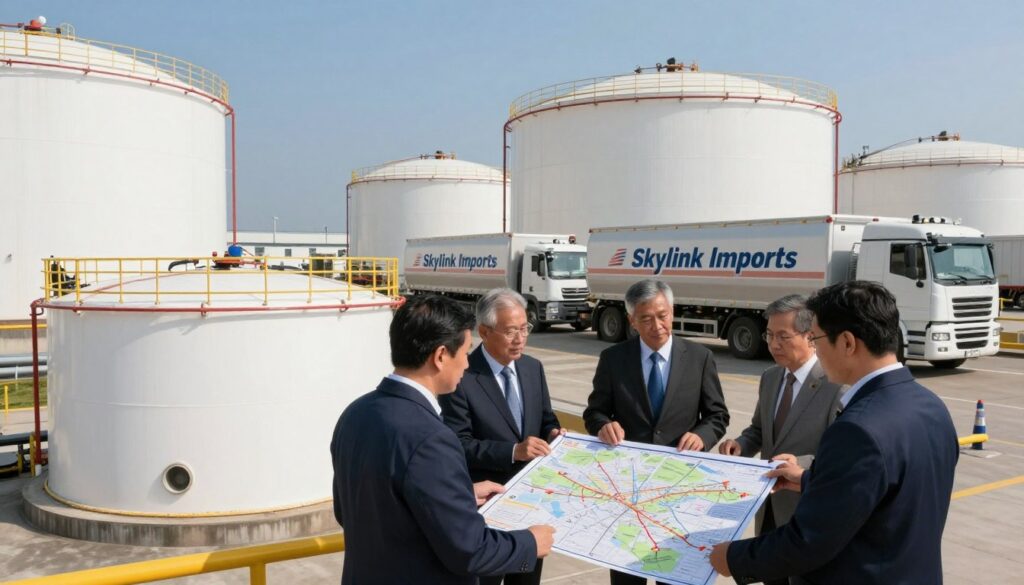
What D6 Fuel Oil Typically Refers To in International Trade
In the global energy market, the term “D6” is often used to describe residual fuel oil. However, its definition can vary significantly depending on the region and the specific refinery output. Buyers must recognise that this term is not a universal standard but rather a commercial designation for heavy fuel oil.
Because of these variations, confirming the exact product identity is essential before entering any negotiations. Relying on vague terminology can lead to costly misunderstandings or the acquisition of fuel that does not meet specific operational requirements.
Who Buys D6 Fuel Oil in Bulk Across the United States
Large-scale fuel procurement is a critical function for various sectors that rely on consistent energy supplies. These organisations often evaluate multiple wholesale fuel options to maintain their operational continuity and manage costs effectively.
- Utility Companies: Power plants requiring high-volume fuel for electricity generation.
- Industrial Operators: Manufacturing facilities that utilise heavy fuel for boilers and furnaces.
- Fuel Distributors: Regional suppliers who manage storage and local distribution networks.
- Maritime and Logistics Firms: Entities requiring consistent bunkering supplies for large fleets.
How Bulk Purchasing Differs From Standard Wholesale Fuel Buying
Bulk purchasing involves more than just buying in large quantities; it requires a sophisticated approach to supply chain management. Unlike standard wholesale transactions, bulk deals often involve long-term contracts, complex freight arrangements, and specific insurance requirements.
Securing affordable fuel purchases requires a deep dive into logistics planning and market timing. By working with experienced partners, buyers can mitigate risks associated with price volatility and supply chain disruptions.
Why Product identity, specifications, and intended use must be confirmed early
The success of any fuel procurement project depends on the alignment between the product and the buyer’s equipment. If the technical specifications do not match the intended application, the result can be equipment damage or regulatory non-compliance.
Skylink Imports emphasises that verified specifications are the foundation of a secure transaction. By conducting thorough due diligence on fuel oil suppliers early in the process, organisations can ensure that their affordable fuel purchases meet all necessary safety and performance standards.
D6 Fuel Oil USA: Bulk Buying Guide for Qualified Buyers
Effective usa fuel procurement begins with a structured approach to your specific energy needs. Skylink Imports specialises in connecting qualified buyers with reputable refineries and authorized mandates to ensure secure transactions. Before you initiate a purchase, you must establish a clear framework to streamline the process and avoid common pitfalls.

Define the Required Volume, Delivery Schedule, and Contract Duration
Precision is vital when you plan to buy D6 fuel oil in bulk. You should clearly define your total volume requirements, including whether you need a one-time spot purchase or a long-term supply contract. Establishing a firm delivery schedule helps suppliers manage logistics and ensures your operations remain uninterrupted.
Document the Intended Industrial, Commercial, or Energy Application
Suppliers require transparency regarding how the fuel will be utilised. Whether the product is intended for power generation, marine propulsion, or industrial heating, the application dictates the necessary quality standards. Providing this documentation early allows for better alignment between your needs and the available supply.
Identify Required Product Specifications Before Requesting Offers
Fuel oil importers must verify that the product meets their specific equipment requirements. You should review technical data sheets to confirm viscosity, sulfur content, and flash point parameters. Having these specifications ready prevents delays during the negotiation phase and ensures the product is compatible with your storage and handling systems.
Set a Realistic Budget for Fuel, Freight, Insurance, and Import Costs
A successful procurement strategy accounts for the total landed cost rather than just the commodity price. You must factor in secondary expenses to maintain financial accuracy throughout the transaction lifecycle.
- Freight and Logistics: Costs associated with vessel chartering or pipeline transport.
- Insurance: Coverage for transit risks and potential cargo loss.
- Import Duties and Taxes: Regulatory fees applicable to your specific port of entry.
- Inspection Fees: Costs for independent third-party quality verification.
| Preparation Category | Key Focus Area | Action Required |
|---|---|---|
| Operational | Volume & Timing | Define monthly consumption |
| Technical | Product Specs | Review Certificate of Analysis |
| Financial | Landed Costs | Calculate total import budget |
By preparing these elements in advance, you position yourself as a serious buyer in the competitive energy market. This disciplined approach facilitates smoother communication with suppliers and helps secure more favourable terms for your business.
How to Evaluate D6 Fuel Oil Suppliers and Wholesale Fuel Options
When sourcing heavy fuel, the difference between a secure transaction and a failed deal often lies in your due diligence process. Navigating the complexities of D6 fuel oil trading requires a systematic approach to vetting every participant in the supply chain. Skylink Imports specialises in connecting qualified buyers with reputable suppliers, refineries, and authorized mandates to ensure secure and efficient transactions across the USA, Canada, and India.
Verify the Supplier’s Corporate Identity and Operating History
Before entering any agreement, you must confirm the legal standing of your potential partner. Request official corporate registration documents and verify their physical office locations. A reputable supplier will maintain a transparent history of operations and provide verifiable references from past clients.
Avoid entities that lack a verifiable digital footprint or professional business registration. Due diligence is your primary defence against fraudulent actors in the global energy market. Always cross-reference company details with local government registries to ensure the entity is authorized to conduct international trade.
Distinguish Refineries, Authorized Mandates, Traders, and Brokers
Understanding the role of each participant is vital for transaction security. Refineries are the primary source, while authorized mandates hold the legal right to represent these facilities. Traders and brokers often act as intermediaries, but their level of authority can vary significantly.
Skylink Imports bridges the gap by identifying the true source of the product. We prioritise direct relationships with refineries and authorized mandates to minimise the number of intermediaries. This approach reduces the risk of miscommunication and ensures that your procurement process remains streamlined.
Review Proof of Product Without Accepting Unverifiable Marketing Claims
Never rely solely on low headline prices or aggressive marketing materials. Legitimate suppliers provide concrete Proof of Product, such as recent Certificates of Analysis or SGS inspection reports. These documents confirm that the fuel meets the required specifications before any funds are committed.
Be wary of offers that seem too good to be true or lack supporting technical data. If a supplier refuses to provide verifiable documentation, treat it as a significant red flag. Transparency regarding product availability is a hallmark of a professional and reliable supplier.
Compare Supplier Offers on Equivalent Commercial Terms
Comparing quotes requires an “apples-to-apples” analysis of all associated costs. Ensure that each offer includes the same Incoterms, freight responsibilities, and insurance coverage. A lower base price may hide high logistical costs or risks that could impact your bottom line.
Evaluate the total cost of ownership, including import duties and local handling fees in the USA. By standardising your comparison criteria, you can make an informed decision that aligns with your budget and operational requirements. This disciplined strategy ensures that your supply chain remains both cost-effective and secure.
Product Quality Standards and Due Diligence Before Purchase
Ensuring the quality of your fuel supply is the most critical step in protecting your industrial machinery. Skylink Imports specialises in connecting qualified buyers with reputable suppliers, refineries, and authorized mandates to facilitate secure transactions. By prioritising rigorous due diligence, you minimise the risk of operational downtime and equipment failure.
Match the Fuel Specification to the Buyer’s Equipment and Regulations
When sourcing fuel from international markets, you must align product specifications with your specific equipment requirements. Whether you are evaluating supply routes from the UK, Germany, or broader Europe, local environmental regulations often dictate the permissible chemical composition of the fuel. Always verify that the product meets the emission standards required by your local jurisdiction before finalising a purchase.
Review the Full Technical Data Sheet and Certificate of Analysis
The Technical Data Sheet (TDS) and Certificate of Analysis (COA) are your primary tools for verifying product integrity. A COA provides a detailed breakdown of the fuel’s physical and chemical properties, such as viscosity, sulfur content, and flash point.Never accept a generic marketing brochure in place of a batch-specific analysis document.
Use Independent Inspection at the Loading and Receiving Points
Independent inspection is a non-negotiable component of a secure procurement strategy. Engaging a third-party surveyor at both the loading port and the final receiving point ensures that the product remains consistent throughout transit. This practice provides an objective verification of volume and quality, protecting your investment from potential contamination or tampering.
Confirm Storage Compatibility and Fuel Handling Requirements
Proper storage and handling are essential to maintain fuel stability over time. You must confirm that your existing infrastructure is compatible with the specific grade of fuel being imported. Safe handling controls, including temperature management and filtration systems, should be established before the product arrives at your facility.
| Control Point | Primary Objective | Responsibility |
|---|---|---|
| Technical Data Sheet | Verify chemical baseline | Supplier/Refinery |
| Independent Survey | Confirm quality/quantity | Third-party Inspector |
| Storage Audit | Ensure infrastructure safety | Buyer/Facility Manager |
| Regulatory Review | Ensure legal compliance | Buyer/Compliance Officer |
Skylink Imports supports worldwide petroleum procurement by helping qualified buyers engage with reputable and properly identified supply-side participants. By following these due diligence steps, you ensure that your energy commodities meet the highest industry standards.
USA Fuel Procurement: Contracts, Pricing, and Payment Structures
Navigating the complexities of fuel procurement in the United States demands precision in contract drafting and risk management. Finding the best d6 fuel oil requires more than just looking at a price tag; it involves a comprehensive evaluation of commercial terms. Skylink Imports specialises in connecting qualified buyers with reputable suppliers to ensure these transactions remain secure and efficient.
Choose the Appropriate Incoterm and Delivery Responsibility
Incoterms define the exact point where risk and responsibility transfer from the seller to the buyer. Selecting the right term is vital for managing logistics costs and potential liabilities during transit. Whether opting for Free on Board (FOB) or Cost, Insurance, and Freight (CIF), clarity prevents costly disputes.
Understand the Main Drivers of D6 Fuel Oil Pricing
Pricing for energy commodities across North America is influenced by a variety of interconnected factors. Buyers must account for benchmark index movements, regional demand, and the specific logistics involved in their supply chain. Freight, insurance, and storage costs often fluctuate, impacting the final landed price of the product.
“Effective procurement is not merely about securing the lowest price, but about building a resilient supply chain through transparent contracts and rigorous due diligence.”
Compare Payment Options Based on Transaction Risk
Payment structures should reflect the level of trust and the risk profile of the transaction. Common methods include Letters of Credit (LC) or Telegraphic Transfers (TT), each offering different levels of security for both parties. Choosing the right structure helps mitigate financial exposure while maintaining healthy supplier relationships.
| Contract Element | Risk Level | Primary Benefit |
|---|---|---|
| Incoterms (FOB) | Moderate | Buyer controls freight |
| Letter of Credit | Low | Guaranteed payment security |
| Spot Pricing | High | Immediate market access |
| Fixed Term Contract | Low | Price stability |
Include Essential Terms in the Sale and Purchase Agreement
A robust Sale and Purchase Agreement (SPA) must clearly outline quality standards, inspection rights, and delivery schedules. By defining remedies for non-compliance, buyers protect their operations from unforeseen disruptions. Skylink Imports facilitates these international transactions by ensuring that all parties align on these critical commercial and quality terms.
Ultimately, identifying the best D6 fuel oil in North America depends on your ability to balance quality, cost, and contract security. By focusing on these core procurement pillars, companies can achieve long-term stability in their energy supply. Professional guidance remains the most effective way to navigate these high-stakes negotiations.
Importing D6 Fuel Oil Into the United States
Successful importation of fuel products requires strict adherence to federal regulations and precise logistics management. Importers must coordinate customs clearance, environmental reviews, and port operations to ensure a smooth delivery process. Securing the best quality D6 fuel oil depends on your ability to manage these complex steps with professional oversight.
Verifiable specifications and transparent authority remain the cornerstones of a secure transaction. You should prioritise a landed-cost analysis to account for insurance, freight, and local taxes before finalising any purchase agreement. Working with the best d6 fuel oil supplier helps mitigate risks associated with international energy trade.
Skylink Imports specialises in the procurement and supply of petroleum products and energy commodities for buyers worldwide. We connect qualified buyers with reputable suppliers, refineries, and authorized mandates to facilitate secure and efficient transactions. Reach out to our team to streamline your fuel procurement strategy and ensure your industrial requirements are met with precision.
Email us: info@skylinkimports.com
Website: www:skylinkimports.com
Contact us: USA: +1 (432) 243-4545