


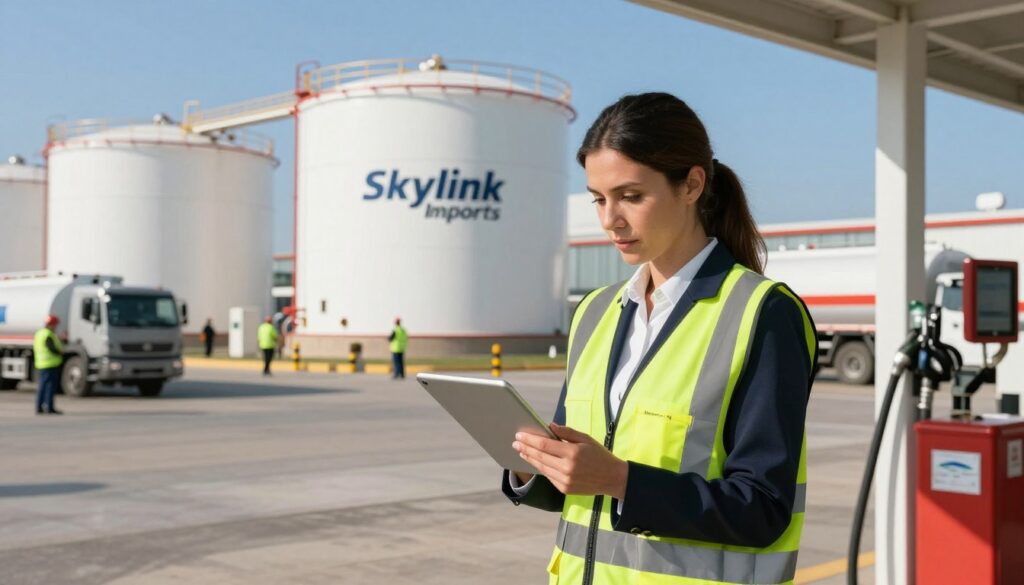
Buyers seeking contracted fuel supply should first distinguish international commodity procurement from a local top-up at a service station. The difference matters when construction operations, fleet planning, or a business site needs a planned volume rather than a retail purchase. FAME means fatty acid methyl ester, a biodiesel component that may be blended into diesel fuel.
Skylink Imports is a procurement and supply company for petroleum products and energy commodities. It connects qualified buyers with reputable suppliers, refineries, and authorized mandates worldwide. This is a B2B procurement and trading service, not a retail forecourt or a promise of island-wide local delivery.
The service can suit buyers assessing international fuel procurement for ongoing operations or a defined project. This page helps you frame a request around the product, volume, destination, and delivery basis for your business needs.
Key Takeaways
- International procurement differs from buying fuel at a service station.
- A sulfur figure alone does not establish a complete diesel specification.
- Choose a fuel grade and format that fit your equipment and receiving point.
- Define delivery terms, inspection, and payment conditions in writing.
- Check the counterparty and product records independently.
Send a specific product, volume, destination, and delivery basis when requesting a transaction discussion.
The Best Guaranteed Diesel Supplier in Singapore | Skylink Imports
A 10 ppm sulfur result confirms the sulfur limit, but it does not by itself prove that the full EN 590:2025 specification is met. EN 590 is an automotive diesel standard; Singapore 10 ppm gasoil is a physical-market cargo specification and assessment reference, not an interchangeable label.
EN 590:2025 sets sulfur at 10 mg/kg, or 10 ppm, and a minimum cetane number of 51. It also requires a flash point above 55°C and limits the T95 distillation temperature to 360°C. For summer grades A, B, and C, minimum density at 15°C is 815 kg/m³.
EN 590 permits up to 7% v/v FAME. Its particle limit is 10,000 particles/ml for particles at least 4 μm at the point of particle certification. The Singapore assessment specification lists a density of 0.820-0.845 g/ml at 15°C, flash point of at least 66°C, and viscosity of 2.0-4.5 cSt at 40°C.
A 10 ppm sulfur result does not establish that a cargo meets every EN 590:2025 requirement.
The Singapore FOB 10 ppm assessment also specifies FAME NIL, water at no more than 200 mg/kg, HFRR lubricity at no more than 460 μm, CFPP at no more than −5°C, and cloud point at no more than −1°C. Its cetane minimum is 51.
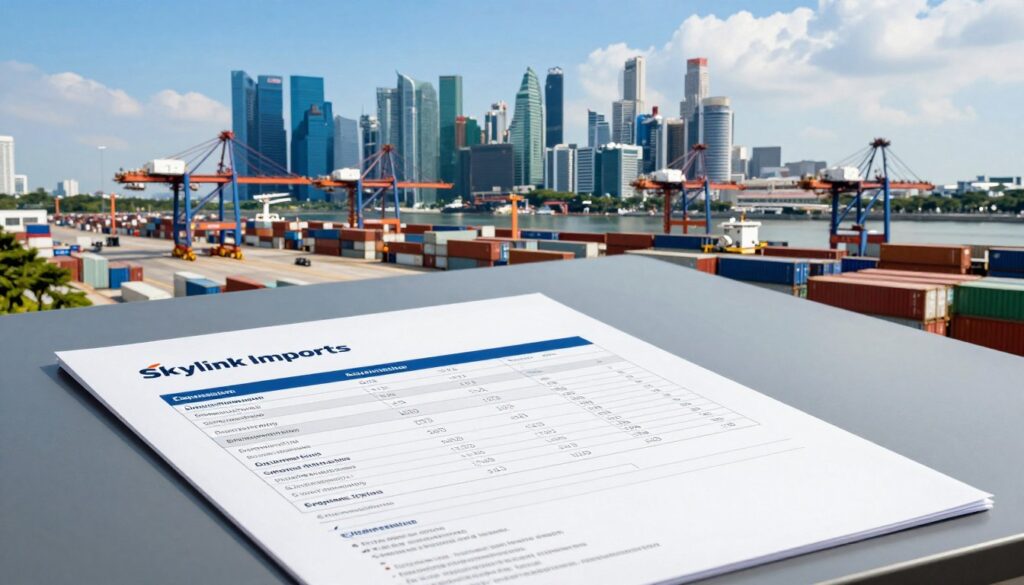
This comparison shows how the stated standards differ; it does not guarantee the quality of a particular cargo. The EN 590:2025 sulfur limit is only one of several required properties.
| Parameter | EN 590:2025 | Singapore FOB 10 ppm assessment | What the distinction means |
|---|---|---|---|
| Sulfur | 10 mg/kg (10 ppm) | ≤10 ppm | Same sulfur limit |
| Cetane number | ≥51 | ≥51 | Same minimum |
| FAME | Up to 7% v/v | NIL | Contract for B0 if zero FAME is required |
Put B0 in the contract whenever zero FAME is a purchase requirement.
What Diesel Grades and Delivery Formats Suit Each Operation?
A site that needs routine equipment refuelling has a different delivery setup from a buyer arranging a seaborne cargo. Choose the format by matching the written grade to site access, storage arrangements, usage, and the receiving point.
Diesel supply formats include drums, IBC tanks, ISO tanks, and bulk road tankers. Each option has different handling and storage needs. A buyer planning equipment use should discuss how fuel reaches the site and how the receiving tank or storage area will be managed.
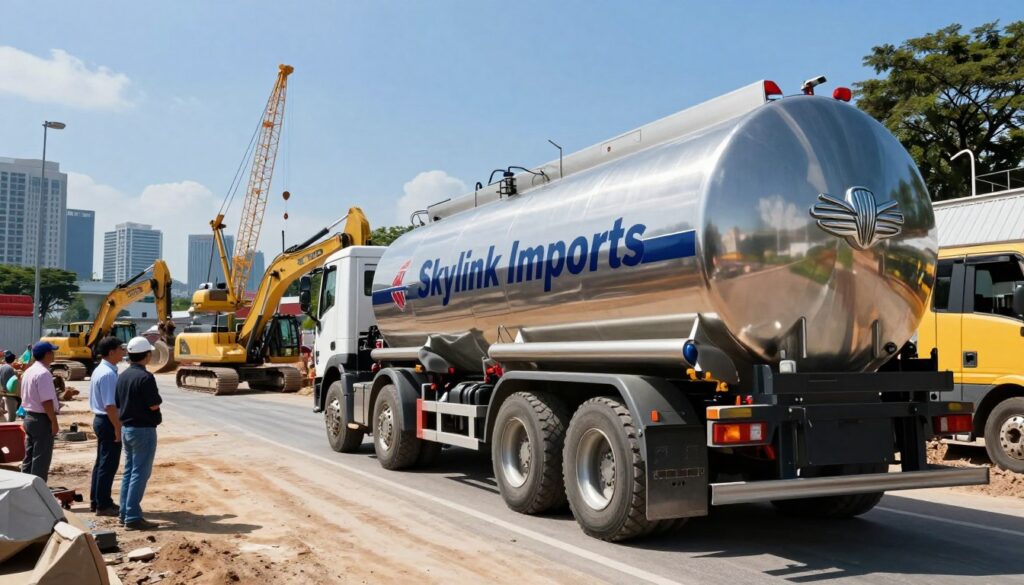
Local Road-Tanker and Packaged Supply
For packaged or local road-tanker delivery, consider site access, the space available for tanks, and expected use. A tanker needs a workable route and receiving point. Drums or containerised formats may suit a site with different access or storage arrangements.
- Drums
- IBC tanks
- ISO tanks
- Bulk road tankers
These are formats to discuss with a supplier, not a statement that every provider offers each one. Confirm the fuel grade, quantity, handling plan, and delivery arrangement before setting up a site supply.
International Cargo and Marine Fuel
International fuel supply can move from refinery to terminal, then by vessel or truck to a delivery site. At each handoff, the buyer should match the cargo records and transfer point to the agreed transaction. An EN 590 diesel procurement and export service can involve international shipment coordination, testing, and export documents.
Marine distillate belongs to the ISO 8217:2024 marine-fuel family, not the EN 590 automotive standard. A buyer should not treat marine fuel as EN 590 simply because both are distillate fuels. EN590 10 PPM Diesel describes a requested grade, while marine fuel requires its own governing specification.
For cargoes, identify whether the delivery uses a vessel, a truck, or a ship-to-ship transfer. The receiving equipment and storage plan should fit the chosen product and handoff. Match the written grade and delivery format to the equipment, storage setup, and receiving point.
What Diesel-Emissions Rules Apply to Vehicles in Singapore?
Singapore’s diesel quality limits, vehicle-registration emissions standard, and test procedure are separate requirements. Euro VI applies to imported vehicle registration, while the motor-vehicle fuel requirement is Euro V diesel or compliant petrol.
The Environmental Protection and Management (Vehicular Emissions) Regulations list motor-vehicle diesel limits including sulfur at no more than 10 ppm, cetane number of at least 51, and polyaromatics at no more than 8 wt%. Other listed limits include density at 15°C no higher than 845 kg/m³, T95 no higher than 360°C, FAME no higher than 7% v/v, and manganese no higher than 0.002 g/L.
All new and used petrol or diesel vehicles imported for registration in Singapore must meet Euro VI emission standards. That vehicle standard is different from the Euro V motor-vehicle fuel requirement. The Euro VI registration standard concerns the vehicle, not a cargo’s full commercial specification.
Singapore adopted the Worldwide Harmonised Light-duty Test Procedure as the sole test procedure for light commercial vehicles on April 1, 2023. The switch for passenger cars, including taxis, was completed on January 1, 2024. These test procedures assess vehicle emissions, not diesel cargo quality.
A business buying diesel for road vehicles should identify whether it needs pump fuel or a contracted delivery service. When assessing local providers, compare licensing, delivery format, service area, and the documents they provide. Construction operations using off-road equipment should also distinguish that operating need from motor-vehicle rules.
Confirm the applicable vehicle and fuel rules with the relevant Singapore authority before relying on a grade name alone.
How Do FOB, TTT, TTV, and TTO Transactions Work?
A benchmark can set the price basis without deciding the cargo’s full quality specification. Contract the product requirements separately from the price reference and delivery terms.
Physical EN 590 10 ppm gasoil cargoes may be discussed on FOB, CIF, and STS bases. FOB and CIF describe delivery and freight responsibilities; STS means ship-to-ship transfer. The contract should name the delivery point and state which party handles each responsibility.
FOB and CIF Cargoes
With FOB or CIF, specify the named delivery location and the agreed division of cargo and freight responsibilities. STS describes the transfer method, not a full product specification. Buyers arranging EN590 FOB terms should make the transfer point and each party’s tasks clear in the contract.
Tank Transfers and Pricing Basis
TTT, TTV, and TTO are transaction labels, not complete contract terms. Define each by the location, product custody, transfer point, and the moment title or risk changes hands. Do not assume an acronym means the same arrangement in every offer.
A buyer can use the Platts Singapore 10 ppm gasoil assessment plus a differential as a price basis. The contract can separately state EN 590:2025, B0, and a specified climatic grade. Price data does not replace the written quality specification.
Use this EN590 Diesel Buying Procedure to organise the commercial terms:
- Specify the grade and FAME requirement.
- Define the delivery basis and transfer point.
- Agree on the price reference and differential.
- Set the inspection and quantity basis.
- Proceed only against verified product and counterparty details.
Write each delivery and transfer responsibility into the signed contract before arranging payment or logistics.
How Can You Verify a Fuel Supplier and Product?
A convincing document is not proof until the named issuer or operator confirms it independently. Check the legal counterparty, product access, and shipment records with the organisations named on those records.
Compare the supplier’s registration number, country of incorporation, and trading licence with its incorporation certificate. Identify the beneficial owner and signing directors. Screen counterparties against OFAC, EU, UN, FATF, and FinCEN sanctions lists before committing your business.
Check the Counterparty
A diesel supplier’s company name is not enough to confirm who can sign for it. Match the contract’s legal entity to the registration and licence details. Confirm ownership and signing authority, then check applicable sanctions lists for the people and companies involved.
Authenticate Product Access and Records
Confirm access to a named terminal through a Tank Storage Agreement or terminal custody confirmation. Contact the terminal operator directly. Verify SGS inspection report numbers with SGS, and check refinery allocation letters with the source refinery.
Authenticate Proof of Product with the issuing inspection company or terminal operator. Records should identify the product and the relevant transaction rather than rely on broad claims of access. A trading company’s paperwork does not replace confirmation from the named issuer.
| What to check | Document or detail | Who to verify with | Purpose |
|---|---|---|---|
| Company identity | Incorporation certificate and licence | Issuing registry | Confirm legal registration |
| SGS report | Report number | SGS | Confirm report authenticity |
| Terminal access | Tank Storage Agreement or custody confirmation | Terminal operator | Confirm access to the named terminal |
| Refinery allocation or Proof of Product | Allocation letter or product document | Refinery, inspection company, or terminal operator | Confirm allocation or product records |
Direct checks matter because a copied report or a terminal name alone cannot establish current access. Match each record to its issuer, product, and stated transaction. A document that cannot be confirmed independently should not support a business commitment.
Confirm that the legal entity signing the contract is the same counterparty whose ownership and trading authority you checked.
Which Documents and Inspection Terms Should a Diesel Contract Include?
A contract protects the buyer only when it says which specification and inspection result control acceptance. Write down the grade, inspection point, test methods, and remedy for any off-spec result.
Do not pay fees before independent inspection or send funds by SWIFT T/T before product confirmation.
State the governing diesel quality specification and grade in the signed terms. Name the controlling inspection point and permitted test methods. Include the load-port Certificate of Quality (CoQ), and define how the contract determines quantity.
Set out the buyer’s rejection rights and the treatment of off-spec parameters. The contract should say which results control acceptance and what remedy applies if the product fails. These terms should match the intended delivery point and the written quality requirements.
A buyer may request a Certificate of Analysis (CoA) and product data sheets as supporting quality documents. They do not replace the governing contract specification or an independent inspection. A document’s title alone does not decide which test result controls a dispute.
Include how the parties record measured quantity, which test methods apply, and how they handle a result outside the agreed range. Clarify whether a disputed parameter leads to rejection or another stated remedy. Keep the signed contract consistent with the delivery and inspection arrangements.
Make rejection rights and the remedy for off-spec product explicit before signing.
Conclusion
A workable diesel transaction starts with a precise grade and a clearly defined delivery point. A supplier name or a 10 ppm sulfur claim alone does not establish that a cargo suits your business or has been verified.
Set the full product specification, delivery basis, and written inspection terms before committing to logistics. Skylink Imports works in B2B procurement and trading, connecting qualified buyers with suppliers, refineries, and authorized mandates worldwide. A qualified inquiry gives the parties a clear basis for discussing the requirement.
Prepare the required volume, destination, specification, and preferred delivery basis before contacting Skylink Imports.