


Discover How To Identify The Best Bulk Fuel Supplier
A missed diesel delivery can leave vehicles and equipment idle even when the business has work scheduled. A farm may miss a planting window, or a construction crew may lose a shift while machines sit without fuel.
EN 590 is a specification for automotive diesel fuel; EN590 Diesel is fuel supplied to that specification. Routine local supply differs from international commodity procurement. Your fit depends on location, product specification, delivery pattern, storage setup, and contract needs.
Choosing on price alone can expose your operations to service gaps or a product mismatch. A dependable source should support your business through ordinary scheduling and emergency needs. Before comparing proposals, list each delivery location, the fuel products required, and the operating conditions that matter.
Key Takeaways
- Match fuel products to equipment and operating conditions.
- Check delivery coverage at every site.
- Request batch-linked quality documents.
- Review tank responsibilities and service charges.
- Write international purchase duties into the contract.
Discover how to identify the best bulk fuel supplier through EN590 Diesel checks
A supplier claiming EN590 Diesel should be able to identify the applicable specification limits and provide batch-linked quality documentation. EN590 10 PPM refers to EN 590’s maximum sulfur content of 10 mg/kg.
Do not treat a general product description as proof that the delivered batch meets your contracted specification.
EN 590 diesel specifications buyers can verify
EN 590 specifies automotive diesel fuel.
These four checks cover sulfur, ignition quality, biodiesel content, and water:
| Measure | EN 590 limit | Test method | Condition |
|---|---|---|---|
| Sulfur | Maximum 10 mg/kg | EN ISO 20846 or EN ISO 20884 | Sulfur content |
| Cetane number | Minimum 51 | EN ISO 5165 | Cetane number |
| FAME | Maximum 7.0% by volume | EN 14078 | Volume |
| Water | Maximum 0.020% by mass | EN ISO 12937 | Mass |
Other limits also matter. Total contamination is at most 24 mg/kg under EN 12662; flash point is at least 55°C under EN 2719. Viscosity at 40°C must be 2.000-4.500 mm²/s under EN ISO 3104.
Density must not exceed 845.0 kg/m³ at 15°C. Polycyclic aromatic hydrocarbons are capped at 8% by mass under EN 12916. Lubricity has a maximum corrected wear scar diameter of 460 µm at 60°C under ISO 12156-1.
Under EN ISO 3405, 95% of fuel volume must be recovered at no more than 360°C during distillation. Temperate grade F has a maximum cold filter plugging point of -20°C. Arctic or severe-winter class 4 has a maximum of -44°C and a maximum cloud point of -34°C.
Check quality documents and product traceability
Ask for a certificate of analysis tied to the delivered batch, with measured results and test methods. Put the applicable specification and test basis in the contract. Ask how the supplier takes samples and controls contamination.
Grade F and class 4 describe different winter conditions, not guarantees for every Canadian location. Match the contracted winter grade to the coldest operating conditions the equipment must handle. for every Canadian location.

How Can You Test a Supplier’s Delivery and Storage Readiness?
A provider is not a practical fit if its delivery area, schedule, or equipment cannot serve the sites that depend on it. Confirm coverage and service capacity for every operating location before agreeing to a supply arrangement.
Confirm service coverage, scheduling, and monitoring
Identifying the best bulk fuel supplier in Canada starts with checking delivery coverage, product availability, and scheduling for each location. Ask how the provider handles routine orders and urgent requests, including after-hours service if your operations need it.
Confirm whether the fuel supplier offers tank rentals, remote monitoring, direct equipment fueling, or other services your sites require. A monitoring system can help you track tank levels, but clarify who receives alerts and who acts on them.
Review delivery access, maintenance duties, and emergency contacts. Your contract should spell out delivery surcharges, fuel levies, monitoring or rental charges, and whether pricing is fixed or index-based. Check notice and termination terms before making a change.
If you are identifying the best bulk fuel supplier in Ontario, check the rules for the specific fuel and tank use. Under Ontario Regulation 217/01, a yard tank for clear on-road diesel used to fuel licensed motor vehicles falls under Ontario’s Liquid Fuels Handling Code. The tank uses CAN/ULC-S601 and must be installed by a TSSA Petroleum Mechanic with a PM.3 certificate.
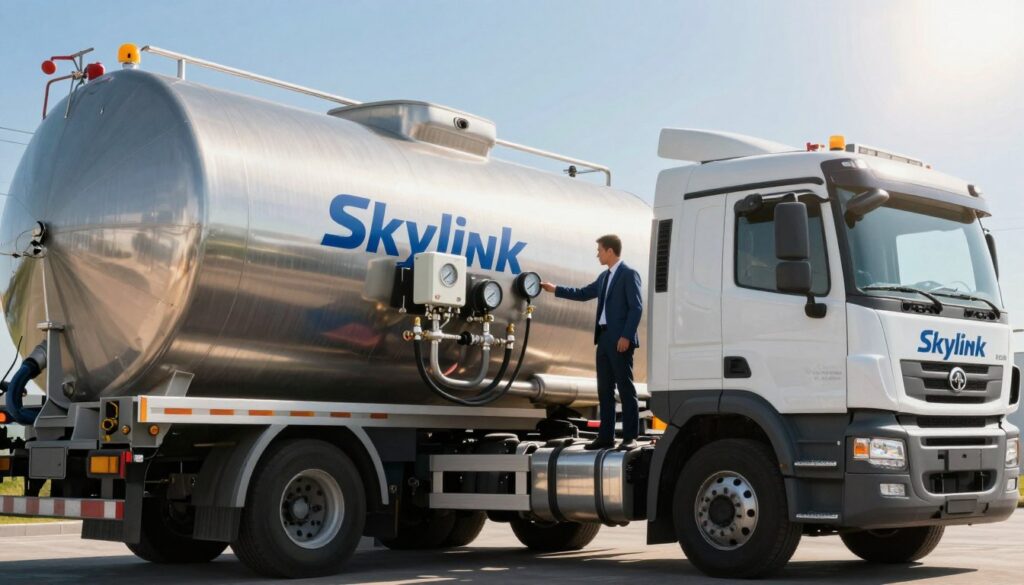
Match tank requirements to the fuel and location
Ontario has separate rules for residential-heating or small-commercial fuel-oil tanks. Under Ontario Regulation 213/01, these tanks are certified to CAN/ULC-S602, capped at 2,500 L, and subject to a 10-year TSSA inspection cycle. These Ontario rules are not Canada-wide requirements.
Ontario tank certification and inspection rules depend on the fuel and use. Ask about licensing and compliance in each jurisdiction where you operate, along with site access and who handles tank upkeep.
When changing providers, review your current contract and arrange the replacement service before ending the existing agreement. That timing helps avoid a gap between deliveries while the new schedule and site setup take effect.
Put every recurring fee and each party’s tank-maintenance responsibility in writing before accepting a service agreement.
What Should an EN590 Diesel FOB Purchase Cover?
An FOB diesel purchase requires the buyer to arrange the vessel and onward transport, while the supplier manages delivery and loading at the agreed export terminal. The buyer arranges ocean freight, marine insurance, vessel nomination, voyage planning, destination logistics, and storage.
Under FOB, responsibility transfers to the buyer after loading is completed as stated in the contract.
Rotterdam, Houston, Fujairah, and Jurong are export-terminal locations buyers may encounter. Skylink Imports specialises in procuring and supplying petroleum products and energy commodities worldwide, connecting qualified buyers with reputable suppliers, refineries, and authorized mandates.
- Verify the supplier and authorized mandate.
- Confirm refinery allocation.
- Sign a contract covering quality, inspection, documents, and responsibility transfer.
- Nominate the vessel.
- Schedule the terminal.
- Arrange independent pre-shipment inspection, such as SGS Inspection, with scope and timing written into the contract.
- Load the cargo and complete export documents.
- Take responsibility after loading under the contract.
Before loading, the supplier typically secures allocation, coordinates terminal operations, loads the vessel, prepares export documents, arranges inspection, and meets contracted specifications. Define TTT, TTV, or TTO in writing, including custody transfer and storage or access duties.
Do not nominate a vessel until the contract, inspection scope, terminal schedule, and allocation are confirmed.
Conclusion
A strong supplier choice is the one that can prove product compliance and meet the operation’s delivery and contract requirements. A suitable partner also accepts clear responsibilities for service, storage, and the terms that govern each transaction.
Prepare a written request for proposals with your products, volumes, delivery sites, scheduling needs, storage arrangements, required quality documents, and contract expectations. Send the same written requirements to each prospective provider so their service and contract terms can be compared fairly.