
A bulk fuel offer is useful only when its delivery, records, and payment terms fit the buyer’s needs. For qualified buyers, energy companies, and traders, a mismatch can complicate a Houston trade before fuel moves.
The demand for EN590 FOB HOUSTON continues to rise, and buyers must ensure they understand the process involved in sourcing EN590 FOB HOUSTON.
FOB means Free on Board, a delivery term that assigns delivery and risk responsibilities at the agreed loading point, as specified by the contract. Buyers also need clear answers about product identity, port handoff, documents, and payment.
Understanding the nuances of EN590 FOB HOUSTON is crucial for successful transactions.
The right offer sets out those details without promising a fixed price or guaranteed allocation. Skylink describes a Houston service for buyers seeking a defined product and transaction scope.
This service for EN590 FOB HOUSTON ensures a reliable supply chain for buyers.
Key Takeaways
- Confirm the product and the specific supply offered.
- Put the physical handoff point in the contract.
- Match shipment records to the agreed product and origin.
- Set payment steps with the seller and the parties’ banks.
- Get written terms for each transaction and monthly program.
The Best Supply EN590 FOB Houston Delivered: What the Offer Covers
Buyers interested in EN590 FOB HOUSTON must review all aspects of the offer carefully.
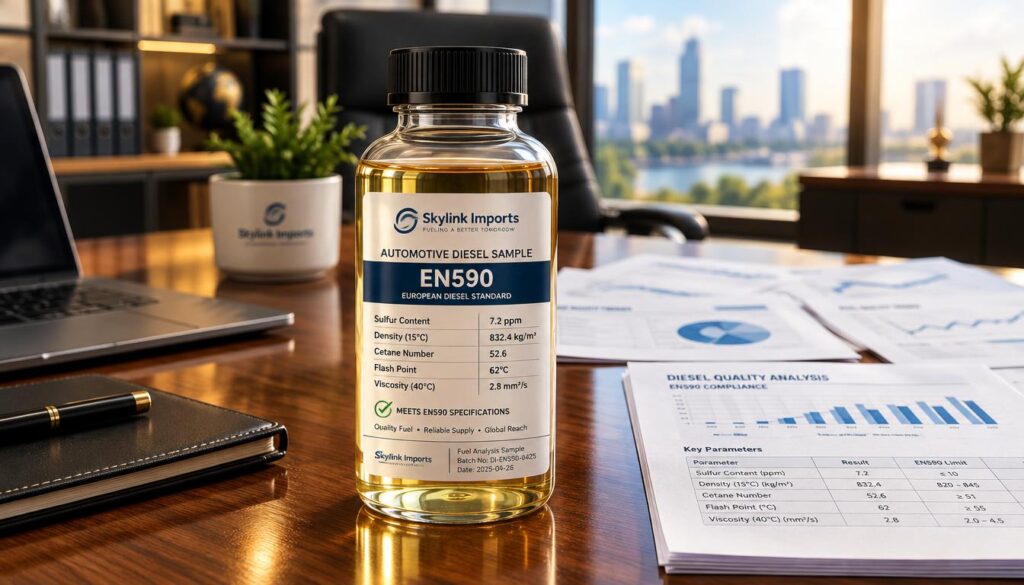
Skylink describes the product as EN590 10 ppm ultra-low sulfur diesel, with sulfur content capped at 10 milligrams per kilogram. That limit defines the 10 ppm sulfur grade, while the actual allocation’s specification remains key.
The specifications for EN590 FOB HOUSTON include important details about fuel quality.
EN590 10 ppm ultra-low sulfur diesel has a maximum sulfur content of 10 milligrams per kilogram. Buyers should match the offered allocation to its written specification.
Matching the specifications for EN590 FOB HOUSTON is essential for quality assurance.
EN590 10 ppm product identity
EN590 is a diesel fuel standard used for automotive diesel in markets that adopt it. The 10 ppm grade is low sulfur diesel, with a defined upper limit for sulfur.
In this description, ppm means parts per million. For sulfur in fuel, 10 ppm corresponds to 10 milligrams per kilogram. The label does not describe every property of the fuel.
Buyers should read the full product specification for the proposed cargo. It should identify the grade and sulfur limit, along with any other agreed fuel requirements.
EN590 ppm diesel may be described as ultra low sulfur diesel. That phrase points to the sulfur level, not proof that a particular cargo meets every buyer requirement.
A buyer’s use also matters. Vehicle makers and local fuel rules may set other requirements, including rules for seasonal grades.
Refinery sourcing and Skylink’s role
Skylink’s commitment to supplying EN590 FOB HOUSTON ensures buyer confidence.
Skylink Imports says it imports EN590 10 ppm ultra-low sulfur diesel from verified refinery sources. This explains its stated sourcing approach for the product.
Refinery sourcing does not establish that Skylink owns a refinery or holds title to every cargo. Nor does it mean every requested quantity has a guaranteed allocation.
Buyers should inquire about EN590 FOB HOUSTON to understand sourcing capabilities.
For a particular trade, the parties need written details on the supply and the seller’s role. Those details can differ by transaction, origin, and availability.
The product description identifies what the offer concerns; the delivery basis sets where the buyer takes responsibility. That handoff needs its own clear terms.
Clear terms regarding EN590 FOB HOUSTON can prevent misunderstandings during transactions.
How FOB Delivery Works at the Port of Houston
Understanding how EN590 FOB HOUSTON operates at the port is vital for efficiency.
A Houston cargo might move from terminal tanks to a vessel, or transfer between agreed tanks. The buyer and seller need to name the physical handoff point and related duties in their contract.
Skylink’s stated delivery basis for Houston is FOB at the Port of Houston. FOB means Free on Board, but the exact duties depend on the agreed contract and its named loading point.
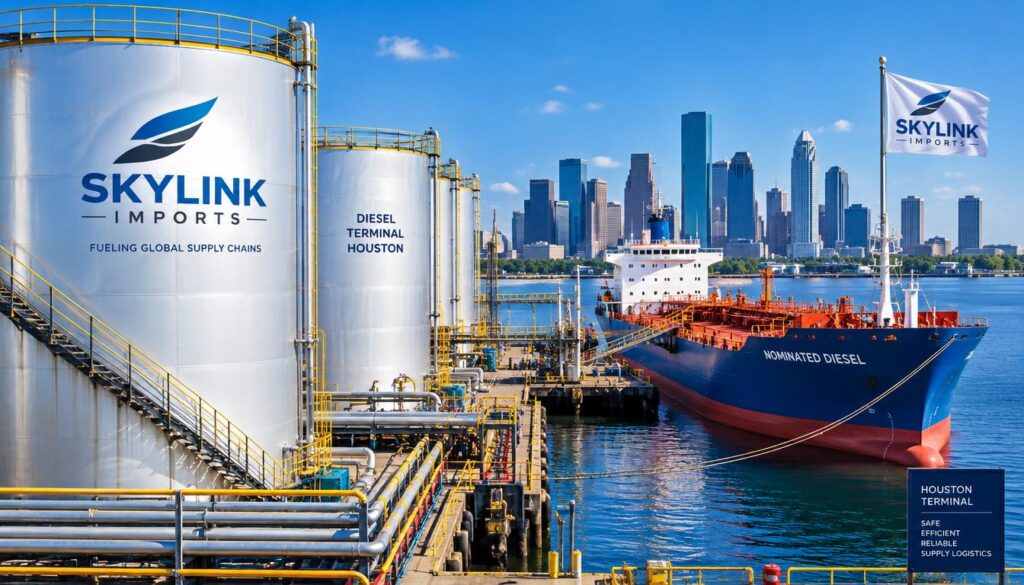
Skylink’s role in managing EN590 FOB HOUSTON logistics enhances service delivery.
At an FOB handoff, the parties should be clear about who arranges the transfer, who handles loading, and when delivery occurs. Terminal rules and the contract shape those details.
Ensuring clarity about EN590 FOB HOUSTON responsibilities improves transaction flow.
Buyers may also encounter tank-to-tank or CIF language in bulk fuel trade. Tank-to-tank describes a commercial transfer agreed by the parties, not a standard Incoterms delivery rule.
| Structure | Physical handoff | Main-carriage responsibility | Buyer’s key confirmation |
|---|---|---|---|
| FOB tank-to-tank | Transfer at agreed terminal tanks | Buyer arranges onward carriage as agreed | Both parties confirm terminal procedures |
| FOB tank-to-vessel | Loading aboard the nominated vessel | Buyer arranges the vessel and onward carriage | Contract confirms vessel arrangements |
| CIF | Named destination, with risk transfer governed by contract | Seller arranges carriage and insurance | Contract names destination and risk terms |
In tank-to-tank deals, both parties should agree on tank access, transfer steps, and the point when custody changes. The terminal’s procedures matter to the practical handoff.
For tank-to-vessel FOB, the buyer’s vessel arrangements must fit the loading plan. The contract should set out who nominates the vessel and what loading terms apply.
With CIF, the seller arranges carriage and insurance to the named destination. The contract still governs when risk transfers between seller and buyer.
CIF is a delivery structure buyers may see in other offers; it is not a promise of CIF availability from Skylink for Houston. Clear terms also guide which shipment records the parties need to review.
Once the physical handoff is settled, buyers can focus on whether the transaction records support the stated product and supply.
What Buyers Should Verify Before Committing
Buyers must verify details about EN590 FOB HOUSTON before finalizing any deal.
An offer can describe a clear diesel grade while leaving the seller’s authority uncertain. Qualified buyers should confirm that the seller has authority over the specific supply before they commit.
Skylink describes its transactions as refinery-backed and supported by professional FOB documentation and internationally recognized trade procedures. The buyer should still check that each proposed party and record fits the specific deal.
Counterparty authority and supply position
Confirm the legal identity of the seller and its role in the transaction. If a refinery or titleholder appears in the offer, check how the seller connects to that party.
A supply or allocation confirmation should relate to the proposed cargo, not just a general company statement. The names, product description, and origin should align across the records.
These checks matter when a seller, refinery, and titleholder are separate parties. Buyers need a documented chain that explains who may offer the supply and who can deliver it.
Product and shipment records
The exact document set is transaction-specific. Possible shipment records include a Certificate of Quality, Certificate of Origin, bill of lading, commercial invoice, and agreed independent Q&Q (quality and quantity) report.
Buyers should compare the product specification and origin across the available documents. A Certificate of Quality should match the agreed grade, while origin records should support the stated source.
Any independent inspection needs an agreed scope and timing. The parties should decide who arranges it and how the inspector coordinates access with the terminal.
A five-point review can help buyers keep the checks focused:
- Counterparty legal identity and authority
- Supply or allocation confirmation
- Product specification and origin
- Inspection scope and timing
- Terminal, storage, and loading arrangements
Inspection records do not replace the contract, and document names alone do not prove a seller’s authority. Each record needs to fit the same proposed transaction.
When the parties have aligned the seller, supply, and shipment records, those verified details can shape a secure transaction procedure.
How a Bulk EN590 Transaction Moves From Inquiry to Loading
A buyer may want fuel for a set port and volume, while the seller needs terms that fit the available supply. The sales and purchase agreement (SPA) and the parties’ banks govern the agreed transaction steps.
Understanding the EN590 FOB HOUSTON inquiry process is essential for buyers.
The SPA records the commercial terms for that sale. The buyer and seller should align the supply, delivery basis, and draft agreement before settling the procedure.
Commercial alignment and financial setup
The process usually starts with buyer qualification and a commercial inquiry. The parties then discuss the supply and delivery basis and review a draft SPA.
Origin, availability, and cargo quantity need written confirmation for the specific transaction. Any proposed monthly program also needs written terms for its volume and timing.
Next, the parties and their banks agree on payment security and the steps each side can meet. The chosen structure should fit the SPA and the banks’ requirements.
A letter of credit may suit some transactions. Payment against agreed shipping documents may suit others. Neither is an automatic Skylink term for every cargo.
Inspection, loading and settlement
If the SPA calls for inspection before or during loading, the parties agree on its scope and timing. The plan also needs to work with terminal access and loading arrangements.
Loading follows the agreed procedure and nominated arrangements. Shipment records then support settlement under the conditions written into the SPA.
That agreement should state which documents are needed and when payment is due. A buyer should not rely on a generic procedure that differs from the signed terms.
Payment procedures can vary with the seller, buyer, cargo, and banks involved. A titleholder’s role should also be clear when that party differs from the seller named in the SPA.
The transaction’s sequence depends on the signed agreement, not on a payment structure assumed in advance. Written terms connect the commercial deal to inspection, loading, and settlement.
With those decision points in view, a qualified buyer can prepare the details needed for a transaction-specific request.
What Qualified Buyers Should Prepare for a Skylink Inquiry
An inquiry that names a target port, quantity, and delivery basis gives Skylink a clearer starting point. Pricing depends on the specific supply, volume, origin, delivery, and agreed commercial terms.
A useful inquiry identifies the requested quantity, target port, and delivery basis. Pricing must be confirmed for the specific transaction.
Skylink Imports specializes in procuring and supplying petroleum products and energy commodities. It says it connects qualified buyers with reputable suppliers, refineries, and authorized mandates.
Skylink’s expertise in EN590 FOB HOUSTON connects buyers with quality suppliers.
Its stated audiences include fuel importers, petroleum distributors, government agencies, energy companies, and commodity traders. A company profile helps explain the buyer’s business and role.
Buyers can make an inquiry more actionable by stating five points:
Buyers should include EN590 FOB HOUSTON details in their inquiries for better outcomes.
- Required quantity
- Spot or per-month requirement
- Requested delivery basis
- Target port
- Preferred payment structure
The inquiry should include a company profile and name the buyer’s authorized decision-maker. This helps the parties know who can discuss terms and approve a proposal.
Monthly demand does not create a standard allocation. A per-month volume and any supply plan need confirmation for the particular offer and written agreement.
No fixed price applies to every supply request. Volume, origin, delivery arrangements, timing, and agreed commercial terms affect pricing, which the parties confirm for each transaction.
Before proceeding, the buyer should compare the written offer with the agreed SPA and confirm that the terms match.
Conclusion
Understanding EN590 FOB HOUSTON offers helps buyers make informed decisions.
A credible bulk fuel offer needs both a defined supply and a clearly agreed transaction structure. The buyer should confirm the specific allocation and put the FOB handoff in writing.
Shipment records and payment terms should match the SPA. That alignment helps prevent confusion about what the seller will deliver and what the buyer must do.
A qualified buyer can send Skylink a transaction inquiry with the required quantity, target port, delivery basis, and preferred payment structure. Those details give the company a basis to review the request.
FAQ
How does 10 ppm relate to EN590 diesel’s sulfur limit?
What can change the price of EN590 FOB Houston?
How much EN590 can a buyer secure per month from Skylink?
Can EN590 10 ppm diesel be used in any diesel vehicle?
Can a buyer request an independent inspection before loading?
What should a buyer do if the seller’s name differs from the refinery or titleholder named in the offer?
Related Articles
Related articles can provide additional insights into EN590 FOB HOUSTON.
Learn more about the advantages of sourcing EN590 FOB HOUSTON through reputable suppliers.
Understanding the competitive landscape for EN590 FOB HOUSTON is beneficial for buyers.
Buyers should familiarize themselves with the EN590 FOB HOUSTON supply chain.